
Democracy is on a roll in Latin America. Since President Donald Trump took office, conservatives have been winning election after election south of the border. And Trump’s closure of the U.S. Agency for International Development (USAID) is an important reason why.
The latest victory came in Colombia, a country perhaps best known for cocaine and corruption. Conservative Abelardo de la Espriella squeaked out a victory over the socialist Gustavo Petro on a platform of restoring law and order, stamping out the cartels and—necessarily—building prisons. Lots of prisons.
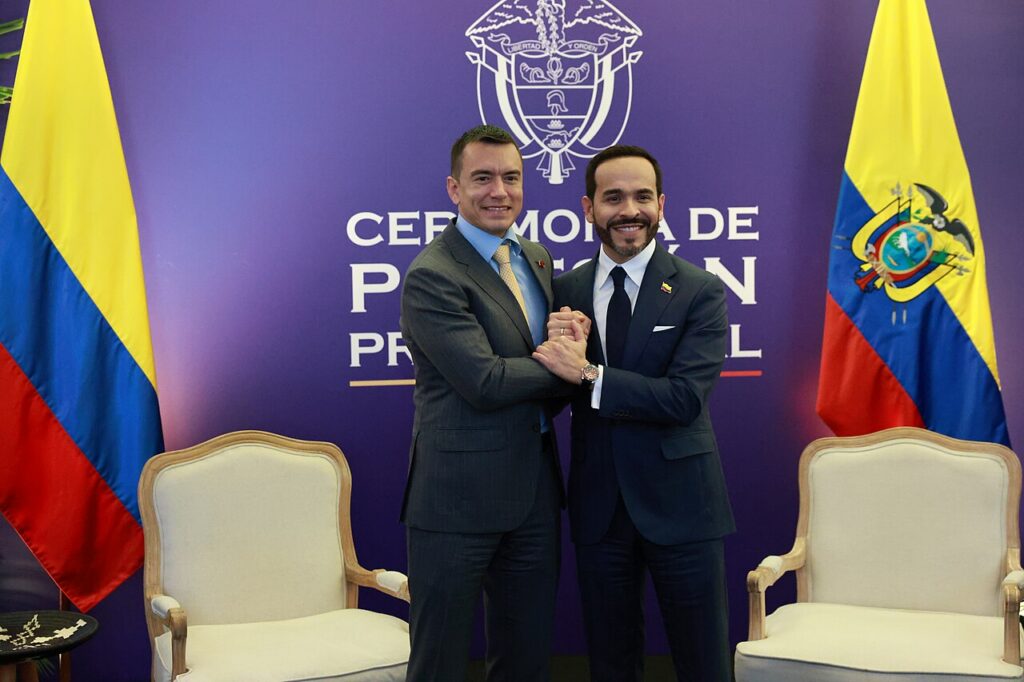
The string of conservative victories began shortly after Trump’s election with the victory of incumbent Daniel Noboa in Ecuador, and has been picking up steam ever since. The Latin American left has now been kicked to the curb in Bolivia, Honduras, Chile, Costa Rica, Peru, and now Colombia.
Together with the conservative governments already in power, namely, El Salvador, Argentina, Paraguay, Panama, and the Dominican Republic, conservative governments now outnumber left-wing ones in the region 12 to 7, or almost two to one.
With the remaining communist dictatorships in the region—Cuba, Nicaragua, and Venezuela—under severe economic and military pressure, the remaining leftist dominos seem certain to continue to fall.
All of this marks a stunning reversal from the Biden years, when left-wing governments outnumbered conservative ones two to one.
Elections in Latin America, like democratic elections everywhere, largely turn on domestic issues—whether a nation’s economy is growing or stagnating, whether its people feel secure in their homes or threatened by rising crime rates, whether its current leaders are popular or despised.
But with the entire region moving rightward at once, it’s clear that something bigger is afoot.
There is no question that the election of a pro-business, anti-crime populist in the United States has galvanized Latin American conservatives, as Darlene McCormick Sanchez has written. Other countries are being drawn along in the Trump administration’s powerful wake.
However, I believe that most observers are missing the biggest factor of all: With President Trump’s closure of USAID, the Latin American Left’s chief political organizer and cash cow up and died.
Most Americans have no idea just how corrosive to life, family, and democracy itself our aid agency had become over the past few decades.
Even today, when they think of the agency, what comes to mind are the whack-a-doodle gender ideology, global warming, or DEI initiatives it was funding.
However, USAID wasn’t just providing transgender activists in Guatemala with millions of dollars for hormones and sex change operations, or showering environmental activists in Colombia with tens of millions of dollars to address a nonexistent climate crisis.
Rather, it was practicing cultural imperialism on a grand scale, engaged in a full-scale makeover of Latin American societies in its own globalist image.
You see, USAID did not just pour billions of dollars into every leftist fantasy project imaginable. Even more importantly, the aid agency was the organizing principle—and chief funder—of an international coalition of donors who financed, legitimized, and professionalized a broad cultural agenda.
Disguising its aims under innocent-sounding words—development, inclusion, rights, sustainability, and cooperation—the coalition pushed a wide array of left-wing causes from abortion, gender ideology, and LGBTQ activism, to radical feminism, radical environmentalism, and open borders.
The USAID-led coalition would sometimes exert direct diplomatic pressure on national governments to embrace this agenda but, as this left it open to charges of cultural imperialism, it preferred to act out of the limelight. So it was that the coalition sent consultants and embedded technical experts in ministries, courts, municipalities, universities, and public agencies in country after country to advance its agenda. These in turn issued reports and carried out national training programs.
The USAID-led coalition also acted through local proxies, nongovernmental organizations, that it funded and supported. They organized media campaigns, conferences, and rallies to promote their specific issues, whether they were gender ideology or climate change.
Taken together, these various progressive organizations constituted a formidable political force, even though their USAID-imposed agenda was almost totally disconnected from the real needs of Nicaraguans and Peruvians.
“When the population demanded hospitals, medicines, and primary healthcare, USAID and its allies offered ‘sexual and reproductive health.’ While children needed to be fed and to learn to read, write, and reason, they were offered so-called ‘comprehensive sexuality education’ based on the concept of self-perceived ‘gender,’” wrote Carlos Polo, head of PRI’s Latin American office.
“When millions of Ibero-Americans had to emigrate because of the lack of employment and leave their families behind, labor policies focused on ‘LGBTQ non-discrimination’ were promoted,” he continued. “When neighborhoods demanded security, they were told about ‘intersectional approaches.’ When families asked for stability, they were offered ‘deconstruction.’”
As this suggests, the Left did not advance in Latin America because it was popular, but because it received massive external support from the USAID-led coalition. The result was that the politics of entire countries were skewed in a leftist direction that did not represent the values of the people of those countries.
Once USAID was shut down, the coalition lost its organizer, the money stopped flowing, and the experts went home.
And the now-weakened Left started losing elections to conservatives who promised to meet their real needs: basic health care, real education, public safety, decent employment, and an end of public corruption.
It turns out that the people of Latin America do not want ideology before bread. They do not want gender before school. They do not want activism before security. They do not want international cooperation used as a Trojan horse to impose policies that they never voted on.
As for the now-defunct USAID, it betrayed its own mission. It was originally set up to promote democracy, and it wound up distorting, even assaulting, it. It was originally set up to promote economic development and alleviate poverty, and it wound up hamstringing it.
America, Latin America, and, for that matter, the world is a better place without it.
******
This article was originally published in the Epoch Times on August 30, 2026.