
Editor’s Note: The closure of USAID, and the rebirth of democracy—and pro-life policies—in Latin America are closely related. And our work at PRI played a key role. Carlos Polo explains:
Seven elections. Seven defeats for the Left. Seven signs pointing in the same direction.
Since the Trump administration began the operational dismantling of USAID, the Ibero-American Left has lost in Chile, Bolivia, Ecuador, Honduras, Costa Rica, Peru, and Colombia. In Chile, José Antonio Kast won; in Bolivia, Rodrigo Paz; in Ecuador, Daniel Noboa; in Honduras, Tito Asfura; in Costa Rica, Laura Fernández; in Peru, Keiko Fujimori; and in Colombia, Abelardo de la Espriella.
This is not a coincidence. Nor does it mean that USAID was the only explanation for all of these results. Elections respond to many factors: insecurity, inflation, government fatigue, corruption, specific leadership, and campaign mistakes. But when seven electoral processes point in the same direction after one of the principal sources of international funding for progressivism was cut off, any serious analyst should examine the phenomenon carefully.
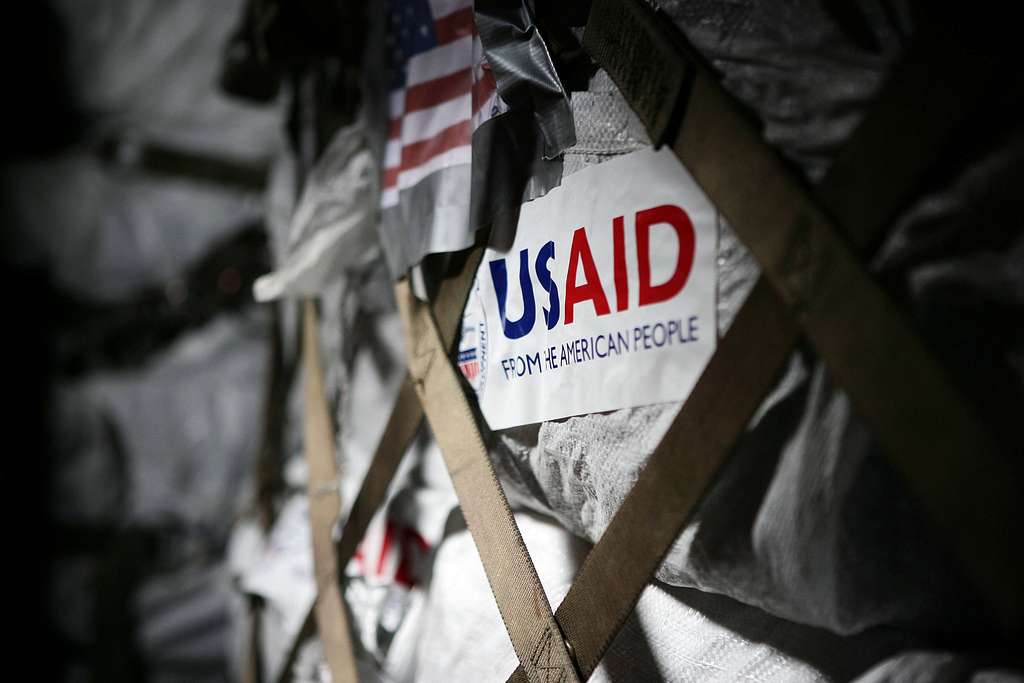
For years, the Ibero-American Left played with an advantage. Behind it stood an extensive network of foreign cooperation that financed, legitimized, and professionalized much of its cultural agenda. USAID was the central piece of that network.
This is the part many prefer not to discuss. The so-called “social agenda” of the Left did not advance because of popular conviction. It advanced because it had money, consultants, NGOs, reports, training programs, campaigns, diplomatic pressure, and technical experts embedded in ministries, courts, municipalities, universities, and public agencies.
Under friendly words such as development, inclusion, rights, sustainability, or cooperation, very specific policies were promoted: abortion, gender ideology, LGBTQ activism, radical feminism, ideological environmentalism, migration managed by international organizations, and “sexual and reproductive health” programs disconnected from the real priorities of the people.
The mechanism was effective. First, these policies were financed from abroad. Then they were presented as technical standards. Afterwards they entered national plans, school curricula, health protocols, labor policies, judicial guidelines, and social programs. Finally, they became permanent public expenditures.
In other words, what began as an imported agenda ended up being paid for by the national taxpayers themselves.
Meanwhile, the real needs of the population lay elsewhere. People wanted better nutrition, decent employment, basic healthcare, real education, housing, public safety, and a determined fight against corruption. But many times they received something else.
While the population demanded hospitals, medicines, and primary healthcare, USAID and its allies offered “sexual and reproductive health.” While children needed to be fed and to learn to read, write, and reason, they were offered so-called “comprehensive sexuality education” based on the concept of self-perceived “gender.” While millions of Ibero-Americans had to emigrate because of the lack of employment and leave their families behind, labor policies focused on LGBTQ non-discrimination were promoted. While neighborhoods demanded security, they were told about “intersectional approaches.” While families asked for stability, they were offered “deconstruction.”
This disconnect between the funded agenda and lived reality explains part of the public’s fatigue. The Left did not lose only because it governed poorly. It lost because it stopped listening to the people. It believed that the people should adapt to its ideological categories, when in reality politics exists to respond to the concrete lives of individuals.
That is why these seven defeats are not an accident. They are the symptom of a deeper rupture. Without the same flow of resources, without the same international network operating comfortably, and without the same ability to impose cultural frameworks through cooperation agencies, many progressive causes have lost momentum and influence at the ballot box.
They had funding, but not always roots. They had technical language, but not always the people. They had international allies, but not always social legitimacy.
Here lies the great conservative opportunity.
But it is not enough to celebrate that the Left is retreating. The right has won elections before and has also disappointed. Conservatism cannot limit itself to being an emotional reaction against progressivism. It must become a serious proposal for national reconstruction.
The first pillar must be the rule of law. Without law there is no freedom. Without independent judges there is no justice. Without legal certainty there is no investment. Without strong institutions, politics becomes spoils. Conservative governments must demonstrate that order is not abuse but the basic condition that allows a family to live, work, educate its children, and plan for the future.
The second pillar must be the market economy. Ibero-America does not need more gigantic states promising endless rights while producing real poverty. It needs investment, private property, formal employment, fewer obstacles, monetary stability, and respect for entrepreneurs. But the market must be linked to real social mobility. Economic freedom will only be politically sustainable if it improves the lives of ordinary people.
The third pillar must be an uncompromising fight against corruption. There can be no half measures here. Corruption destroys roads, hospitals, and schools, but it also destroys something deeper: trust. When citizens believe everyone steals, they stop believing in the law. When they stop believing in the law, they seek strongmen. And when they seek strongmen, the republic begins to fall ill.
The fourth pillar must be the defense of the family and of life—not as rhetorical decoration, but as the center of a truly humane public policy. The family is the first network of social protection. Human life is the first right. A nation that despises life, weakens motherhood, relativizes the education of children, and reduces sexuality to consumption cannot build sustainable development.
The seven elections lost by the Left since the operational closure of USAID show that the board has changed. The international infrastructure that for years sustained much of the progressive agenda no longer operates with the same strength. And when external funding declines, what many citizens had been saying quietly becomes much clearer: our priorities are different.
People do not want ideology before bread. They do not want gender before school. They do not want activism before security. They do not want international cooperation used as a Trojan horse to impose policies that were never voted on.
Without USAID, the Ibero-American Left is in retreat. History has opened a window. The question is whether Ibero-American conservatism will have the maturity to pass through it.