
Chinese one-child policy

PRI Insider (Volume 6, Issue 29) July 17

In This Issue: Ireland recorded 10,600 abortions in 2025, a 59.02% increase from 6,666 in 2019, the first-year abortion on demand became legal. The latest figures bring the total number of abortions since legalization to nearly 60,000.

Read More »

PRI Insider (Volume 6, Issue 26) June 26

In This Issue: Four years after the Dobbs decision, abortion pills obtained through telehealth continue reshaping the abortion landscape. By December 2025, 29% of U.S. abortions were due to telehealth, with abortion providers increasingly relying on mail-order distribution to reach women in states with pro-life protections.

Read More »

PRI Insider (Volume 6, Issue 23) June 5

In This Issue: After years of relentless decline, South Korea’s fertility rate showed an unexpected increase, rising from a record-low 0.72 children per woman in 2023 to 0.75 in 2024 and 0.80 in 2025. March births surged 19.4% year-over-year to 25,200, the highest March total since 2019.

Read More »

PRI Insider (Volume 6, Issue 18) May 1

In This Issue: Germany recorded just 655,000 births in 2025, down from 680,000 the year before, while more than one million deaths produced a record birth deficit of roughly 350,000. The nation’s fertility rate fell to just 1.35 children per woman, marking a fourth straight year of decline.

Read More »

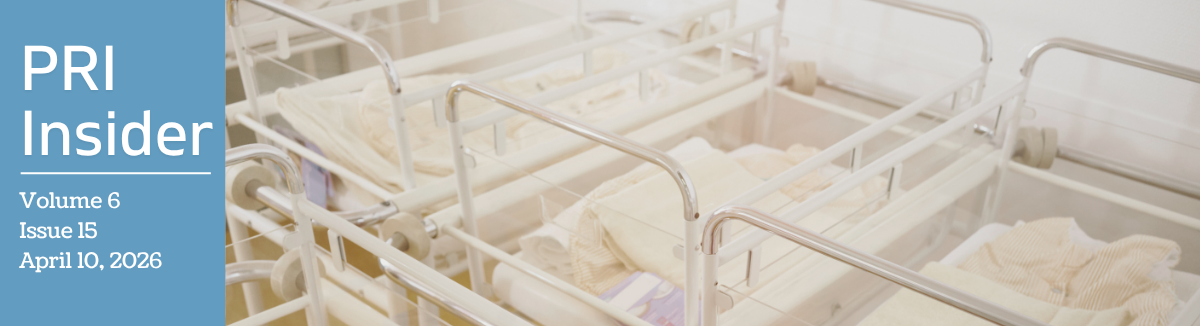
PRI Insider (Volume 6, Issue 15) April 10

In This Issue: New CDC data show U.S. births declined 1% in 2025 to 3,606,400, with the general fertility rate falling to 53.1 births per 1,000 women. Teen birth rates dropped 7% to a record low of 11.7 per 1,000—down 72% since 2007. Meanwhile, the abortion industry continues to expand, with growing use of abortion pills contributing to fewer births.

Read More »

PRI Insider (Volume 6, Issue 13) March 27

In This Issue: Japan is moving to fully cover childbirth costs under its public insurance health system as births fall for the 10th straight year. In 2025, births dropped below 710,000. Despite spending over $20 billion annually on pro-natal policies, the crisis has deepened. Current subsidies of 500,000 yen ($3,130) often fall short of average delivery costs, especially in Tokyo.

Read More »

PRI Insider (Volume 6, Issue 6) February 6

In This Issue: Among European Union countries, at least 12 still allow the sterilization of women with disabilities without their consent—often while they are minors—despite most having ratified the Istanbul Convention. The practice violates basic human rights and persists under the guise of “care,” driven in part by the belief that disabled women cannot be good mothers.

Read More »

PRI Insider (Volume 6, Issue 4) January 23

In This Issue: The Trump administration announced it is ending all NIH funding for research using tissue from aborted babies, effective immediately. The policy applies across all NIH grants and programs, expanding on Trump’s first-term ban on intramural fetal tissue research. NIH Director Jay Bhattacharya said ethical alternatives now make such research unnecessary.

Read More »

PRI Insider (Volume 6, Issue 3) January 16

In This Issue: Taiwan has broken the record for world’s lowest birth rate, according to newly released government data. Births fell for the 10th consecutive year, with just 107,812 newborns in 2025, a 20% drop from 2024. Taiwan’s birth rate stands at 4.62 per 1,000 people, with its total fertility rate estimated at around 0.72, despite recent government subsidies aimed at boosting births.

Read More »

PRI Insider (Volume 6, Issue 2) January 9

In This Issue: President Trump sparked backlash from pro-life leaders after urging House Republicans to be “flexible” on the Hyde Amendment, the 1976 provision barring most federal abortion funding, including through Medicaid. The remarks drew swift criticism from pro-life groups and lawmakers who warned that Hyde is a non-negotiable principle.

Read More »

PRI Insider (Volume 6, Issue 29) July 17

In This Issue: Ireland recorded 10,600 abortions in 2025, a 59.02% increase from 6,666 in 2019, the first-year abortion on demand became legal. The latest figures bring the total number of abortions since legalization to nearly 60,000.

Read More »

PRI Insider (Volume 6, Issue 26) June 26

In This Issue: Four years after the Dobbs decision, abortion pills obtained through telehealth continue reshaping the abortion landscape. By December 2025, 29% of U.S. abortions were due to telehealth, with abortion providers increasingly relying on mail-order distribution to reach women in states with pro-life protections.

Read More »

PRI Insider (Volume 6, Issue 23) June 5

In This Issue: After years of relentless decline, South Korea’s fertility rate showed an unexpected increase, rising from a record-low 0.72 children per woman in 2023 to 0.75 in 2024 and 0.80 in 2025. March births surged 19.4% year-over-year to 25,200, the highest March total since 2019.

Read More »

PRI Insider (Volume 6, Issue 18) May 1

In This Issue: Germany recorded just 655,000 births in 2025, down from 680,000 the year before, while more than one million deaths produced a record birth deficit of roughly 350,000. The nation’s fertility rate fell to just 1.35 children per woman, marking a fourth straight year of decline.

Read More »

PRI Insider (Volume 6, Issue 15) April 10

In This Issue: New CDC data show U.S. births declined 1% in 2025 to 3,606,400, with the general fertility rate falling to 53.1 births per 1,000 women. Teen birth rates dropped 7% to a record low of 11.7 per 1,000—down 72% since 2007. Meanwhile, the abortion industry continues to expand, with growing use of abortion pills contributing to fewer births.

Read More »

PRI Insider (Volume 6, Issue 13) March 27

In This Issue: Japan is moving to fully cover childbirth costs under its public insurance health system as births fall for the 10th straight year. In 2025, births dropped below 710,000. Despite spending over $20 billion annually on pro-natal policies, the crisis has deepened. Current subsidies of 500,000 yen ($3,130) often fall short of average delivery costs, especially in Tokyo.

Read More »

PRI Insider (Volume 6, Issue 6) February 6

In This Issue: Among European Union countries, at least 12 still allow the sterilization of women with disabilities without their consent—often while they are minors—despite most having ratified the Istanbul Convention. The practice violates basic human rights and persists under the guise of “care,” driven in part by the belief that disabled women cannot be good mothers.

Read More »

PRI Insider (Volume 6, Issue 4) January 23

In This Issue: The Trump administration announced it is ending all NIH funding for research using tissue from aborted babies, effective immediately. The policy applies across all NIH grants and programs, expanding on Trump’s first-term ban on intramural fetal tissue research. NIH Director Jay Bhattacharya said ethical alternatives now make such research unnecessary.

Read More »

PRI Insider (Volume 6, Issue 3) January 16

In This Issue: Taiwan has broken the record for world’s lowest birth rate, according to newly released government data. Births fell for the 10th consecutive year, with just 107,812 newborns in 2025, a 20% drop from 2024. Taiwan’s birth rate stands at 4.62 per 1,000 people, with its total fertility rate estimated at around 0.72, despite recent government subsidies aimed at boosting births.

Read More »

PRI Insider (Volume 6, Issue 2) January 9

In This Issue: President Trump sparked backlash from pro-life leaders after urging House Republicans to be “flexible” on the Hyde Amendment, the 1976 provision barring most federal abortion funding, including through Medicaid. The remarks drew swift criticism from pro-life groups and lawmakers who warned that Hyde is a non-negotiable principle.

Read More »