

Madrid has just approved something called the “Law of the Unborn Child” and pro-lifers are quietly applauding.
Not that the law, despite its name, prohibits or even restricts abortion. It does not.
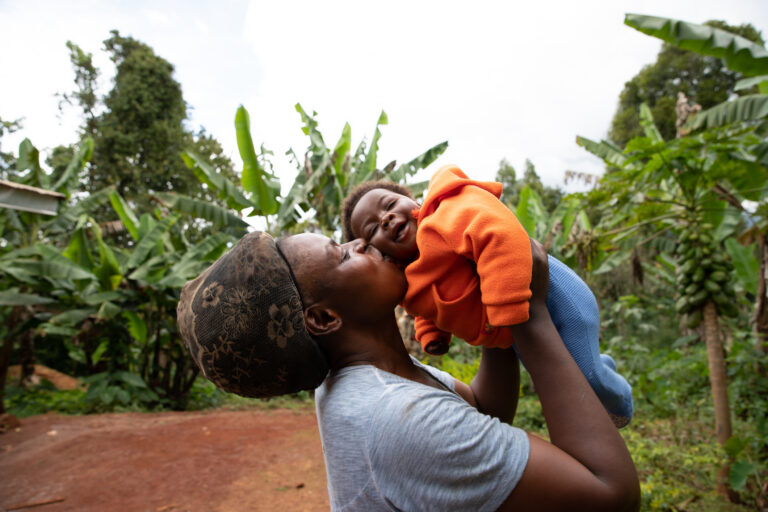
But what it does do is recognize that unborn children exist.
The new law, passed by the regional parliament, states that families who are expecting a child can receive certain forms of public assistance and qualify for certain tax breaks. Moreover, beginning in the 14th week of pregnancy, a family expecting its third child will now be officially recognized as a “large family” and receive the benefits that this allows.
In a secularized Spain where abortion has become normalized, this is a thoroughly countercultural gesture, if not a revolutionary act.
While the practical effect of the law is limited—some babies will perhaps be saved from abortion by the early provision of family benefits—the most important aspect of this law is the principle it affirms.
The abortion movement in Spain, as throughout Europe, has long insisted that the conceived child must remain invisible until birth. The very name of the new law—the Law of the Unborn Child—breaks this taboo.
Aside from merely regulating conduct, laws also educate. When a government recognizes unborn children as members of a family, even if only for certain benefits, it sends a cultural message that they are also members of the human family.
The authors of this law did not set out to make a pro-life statement. Madrid Regional President Isabel Díaz Ayuso is not a pro-life leader and has not proposed overturning Spain’s national abortion laws. But her center-right regional government still mustered the political will to acknowledge the conceived child institutionally and strengthen family policy.
Spain’s Leftists certainly understood the pro-life implications of this legislation. Joined by the national media, they vigorously opposed it, arguing that it undermines the right to abortion. In fact, Spain’s socialist government has responded by trying to shoehorn abortion into the Constitution, as France has already done.
They understood what some conservatives still fail to grasp, namely, that every victory in the culture wars begins by first changing the language and symbols; the law will then follow.
The history of the American pro-life movement, with its long decades of partial measures, state legislation, and small legal advances (that seemed limited at the time), gradually resulted in the overturning of Roe v. Wade.
Europe needs precisely this kind of hope.
For years, Spanish pro-lifers have felt that they were fighting a losing battle, with the only remaining question being how to best manage their retreat. The passage of the Law of the Unborn Child shows that there are still ways to publicly highlight the value of the unborn child and to translate that recognition into concrete public policies.
It is worth noting that the law was passed shortly after the visit of Pope Leo XIV, who in his address to the Spanish Congress, affirmed that the true common good begins with the defense of life.
The defense of life does not always advance through sweeping constitutional reforms. Sometimes it progresses by gradually recovering fundamental truths that seemed to have been forgotten.
Recognizing that a conceived child is already part of his or her family may appear to be a small gesture. Yet every civilization begins by answering one essential question: Who deserves to be recognized as one of us?
Madrid has just offered an answer.