IPAS used to be known as the main promoter of Manual Vacuum Aspirators—little handheld suction abortion machines that it shipped by the millions to the developing world.
But IPAS—the name is an acronym for International Pregnancy Advocacy Services—has grown ambitious of late. It is no longer content to simply provide the means for women to terminate their pregnancies.
The first hint of IPAS’s expanding ambitions came when it participated in the New York Times campaign against El Salvador, which misrepresented a case of infanticide—a woman had killed her newborn daughter—as an abortion. Then came IPAS’s intervention before the Supreme Court of Nicaragua to argue that the law abolishing therapeutic abortion was unconstitutional and its criticism of the Mexico City Policy in a congressional hearing.
Over the past few years IPAS has gone even further, transforming itself into a highly specialized transnational network dedicated to creating what it calls “Sustainable Abortion Ecosystems” in country after country.
A “Sustainable Abortion Ecosystem” is a social, cultural, legal and medical environment within which abortion-on-demand is not only accessible but acceptable; no more questioned than a tooth extraction. You might call it mainstreaming abortion.
According to IPAS, a Sustainable Abortion Ecosystem has eight moving parts: individual knowledge and autonomy; social norms and community support; political leadership; legislation; financing; products; healthcare workforce and service delivery; and health information.
Each of these parts reinforce the others.
A favorable law facilitates financing. Financing makes it possible to acquire medications and train professionals. Professionals make it possible to expand services. Cultural campaigns modify social attitudes. And changed social attitudes can in turn assist the passage of favorable laws.
The organization that was once content to send out MVAs is now engaging in social engineering and cultural imperialism on a grand scale.
IPAS intervenes in laws, but also in those who draft them; in medical services, but also in those who provide them; in medications, but also in the chains that make it possible to distribute them; and in people, but also in the social norms that determine how those people interpret abortion.
Technology to Reproduce the Model
At the same time, IPAS has not only continued, but has also greatly expanded its efforts to transfer technology.
IPAS develops and disseminates clinical technologies, pharmacological protocols, manuals, training programs, intervention methodologies, and digital tools that can be transferred to professionals and institutions in different countries.
MVAs are not simply shipped, they come with guides, protocols, training materials, and distribution systems around it. The same is true with the Abortion Pill: IPAS defines protocols for the use of mifepristone and misoprostol, trains professionals, informs users, and works to incorporate these drugs into healthcare systems.
IPAS even runs an entire university dedicated to different ways to eliminate unborn children.
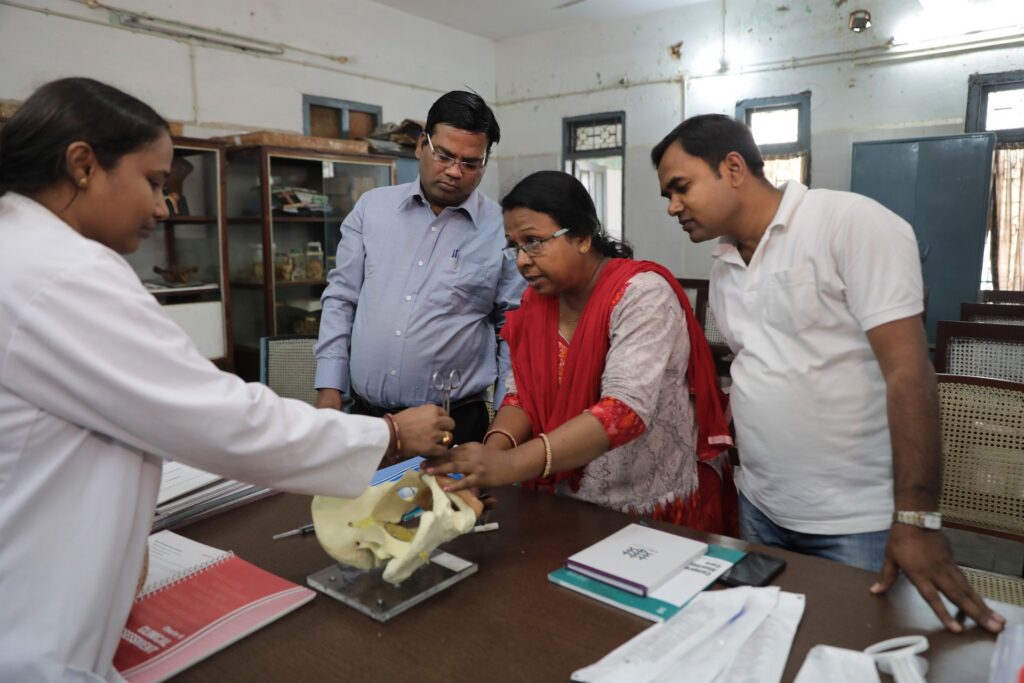
IPAS University offers courses on medication abortion, uterine evacuation, manual aspiration, and other subjects related to its procedures.
Finally, there is VCAT, short for Values Clarification and Attitude Transformation, a methodology designed to weaken resistance to abortion while fostering attitudes of acceptance and support for ending an unborn child’s life.
No Sustainable Abortion Ecosystem can survive without popular support, even if it has to be manufactured.
The scale of IPAS’s efforts comes through in the organization’s own reports.
In 2022, its Latin American office reported having reached more than 1.6 million people with information about self-managed abortion with pills. Between 2023 and 2025, its chatbot “Sofía” was used by more than 39,000 people, while another digital resource, “Te Acompaño,” accumulated more than 51,000 visits. A video about abortion with misoprostol exceeded 5.3 million views.
To view IPAS solely as an NGO that promotes abortion grossly understates its ambitions.
IPAS wants nothing less than for abortion to become both widely available and widely accepted, even celebrated, in the societies it seeks to influence.
That’s why it is not content to modify a law; medications must be ensured. It is not enough to have medications available; professionals must be trained. It is not enough to train professionals; attitudes must be transformed, financing guaranteed, networks created, information generated, and political backing built.
An entire ecosystem must be built around abortion that that makes its expansion inevitable, and its reversal almost unthinkable.
IPAS’s actions deserve to be studied carefully by the pro-life movement.
For decades, the debate over abortion focused on one fundamental question: Is it legal or illegal?
The international abortion movement has moved beyond this in its efforts to reshape society itself.
IPAS’ strategy highlights the fact that major political and cultural transformations rarely depend on a single law, a single organization, or a single campaign. They occur when different elements begin to function together until they turn what was previously exceptional into a stable part of the system.
Pro-lifers have a lot of work to do.