
For the second time since World War II the geopolitical tectonic plates of the world are shifting decisively in favor of the U.S.
The first shift began with the election of Ronald Reagan in 1980 and ended with the 1991 collapse of the Soviet Union that left America as the sole superpower.
The second began with last year’s election of Donald Trump. While it is still early days—the outlines of restored American preeminence and what it would mean for the rest of the world are becoming visible.
And the world’s biggest loser is clearly China.
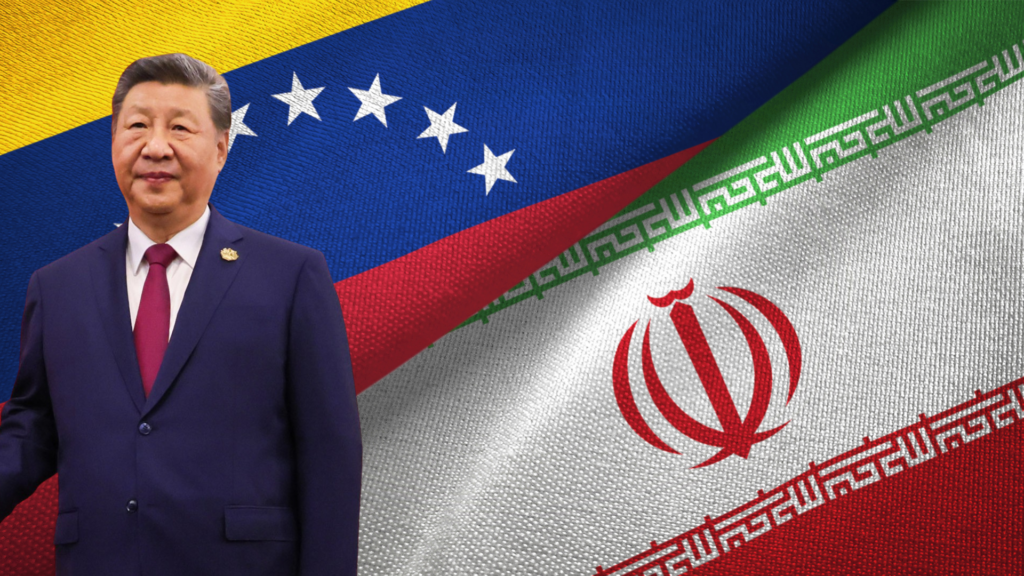
Beijing’s immediate concern is access to energy. Venezuela and Iran, China’s closest allies in Latin America and the Middle East, together used to account for one-third of China’s petroleum imports
Venezuela was lost to China two weeks ago. The country that has 17 percent of the entire world’s petroleum reserves has now ceded control of this vital resource to the United States as its oil infrastructure is rebuilt by American companies.
In words that must have added more than a little salt to this geopolitical wound, Trump assured Beijing on January 9 that “China can buy all the oil they want from us.” But it won’t be cheap, he might have added.
China now has the additional worry that, if the Ayatollahs are toppled in Iran, they will lose unfettered access to cheap oil from that country as well. The effective result would be an American chokehold on the energy that China’s industry—and its military—needs to operate.
But this is only the beginning of China’s headaches. The obliteration of Venezuela’s entire arsenal of Chinese-made weapons systems–without the loss of a single American plane, pilot, or soldier—was a tremendous loss of face for China.
China’s diminishing number of allies now know that it is helpless to protect them. Beijing’s arms industry will hemorrhage customers around the world for its ineffective radar, drone, and missile systems.
Even more to the point, the Iranian armed forces now know that the Asian giant, at least in terms of its military hardware, is a paper tiger.
The collapse of the Ayatollah’s regime in Iran would be an even bigger geopolitical disaster for Beijing than the loss of Venezuela. It would be nothing less than a modern-day equivalent of the fall of the Berlin Wall.
Imagine a future Middle East in which Iran is no longer supporting terrorist groups across the region. No more money, weapons and training of Hezbollah in Lebanon and Syria, of the Houtis in Yemen, of Hamas in Gaza, and of the radical Islamic terror groups in Iraq.
Without ongoing Iranian support, these groups would not long survive. The nations in which they operate would quickly eliminate them. More nations would join the Abraham Accords, and peace would finally reign in the Middle East.
Just as the fall of the Wall led to freedom in Eastern Europe, so the end of the Ayatollahs would mean the effective end of China’s meddling in the Middle East, and usher in a period of stability and prosperity.
This is good news for the world, but more bad news for China. Stability in the Middle East means that we no longer need a base at Al Udeid in Qatar, and can dramatically reduce our naval presence in the Gulf of Arabia and the eastern Mediterranean.
The long-delayed Pivot to Asia can now take place in earnest as these military assets are transferred from Central Command to the Indo-Pacific Command. These forces would greatly reinforce our existing presence in South Korea, Japan and the Philippines, further complicating China’s strategic planning for, say, a future invasion of Taiwan.
With China dependent upon U.S. goodwill for access to oil, and with a reinforced U.S. presence along the Pacific Rim, the odds of a successful attack go way down–increasing the likelihood that Beijing will not even attempt it..
The bottom line is that the loss of Venezuela and Iran–two of China’s most important proxies–means that China will be forced to put its dream of dominating Asia on hold.
Reports from China indicate that the fall of its proxies has created problems even closer to home. There are reports of increasing unrest throughout the country as the economy stumbles and as the regime’s prestige falls and America’s rises. Freedom is infectious.
China’s leaders are not peacefully sleeping in their beds tonight.
Not because they might be whisked away at midnight by U.S. Special Forces.
But because their own people, inspired by these winds of freedom, are growing restless.
******
This article originally appeared in the NY Post on January 17, 2026.