
Mary Mwangi was only 26 years old when she felt a sharp pain in her pelvis and began spotting blood. The pain grew sharper by the hour, and the dark red spotting was soon constant. When she arrived at the Catholic mission hospital, the doctors faced a familiar challenge: Was Mary just having a difficult menses or was she suffering from something far more serious?
The ultrasound gifted to the hospital by PRI was brought in and instantly made the problem clear.
Mary’s sonogram revealed a mass on her fallopian tube and blood already pooling in her body cavity—a fallopian tube on the verge of rupture. She was quickly wheeled into surgery and operated on. The doctor was able to remove the mass before shock set in and she hemorrhaged to death. Because of the diagnosis enabled by the ultrasound, a tragedy was averted. Mary survived.
Faith Wanjobi, 29 years old, had been excited to learn from her first ultrasound at the Catholic mission hospital that she was carrying not one, but two healthy babies. But when she went in for a second scan at 22 weeks, she was heartbroken to learn that one of the twins had died. The collapse of its tiny skull was visible on the ultrasound. Now aware of the risks, the doctors began carefully monitoring the surviving twin, having Faith come in every week to check on her baby’s development. As soon as the baby’s lungs were mature and could be safely delivered, they performed a cesarean section. She was a healthy baby girl.
Had an ultrasound machine not been available, neither Faith nor the doctors would have known anything was wrong until she went into labor. She might have lost the second baby and even her life. Instead, the window on the womb provided by the sonogram allowed the doctors to provide exactly the kind of careful, lifesaving care she needed.
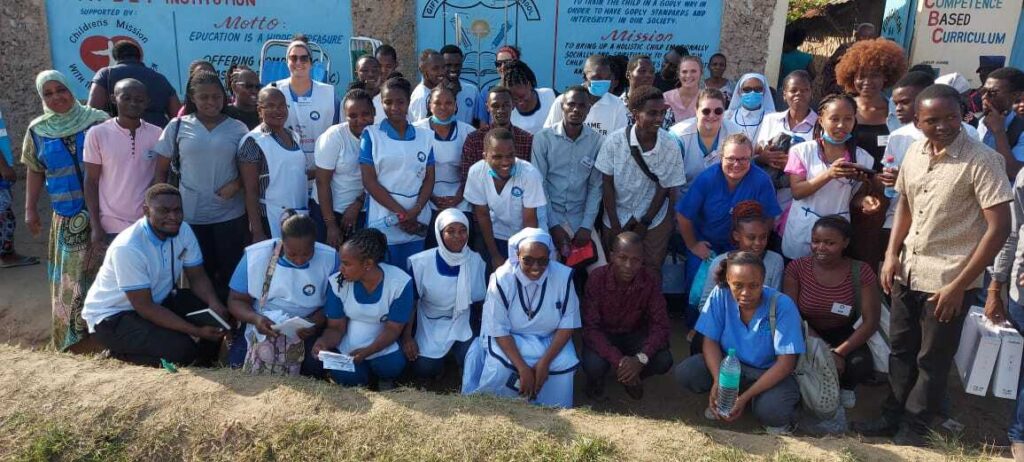
Mary and Faith are just two of the hundreds of mothers and babies who have been saved because doctors at a Catholic mission hospital in Kenya had access to an ultrasound machine. Their stories were shared with us by the nun in charge of the hospital, who wrote to us to express gratitude on behalf of the hospital, its staff, and the many communities they serve. The presence of an ultrasound machine to do diagnostic imaging is a game changer.
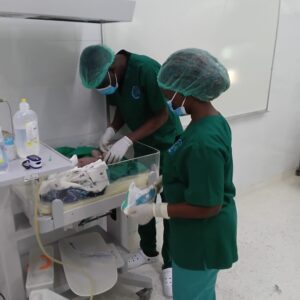
The Catholic mission hospital serves a large but poor region where access to advanced medical technology is simply unavailable for most families. Before the arrival of the ultrasound, doctors had to rely solely on physical examinations and reported symptoms in their diagnoses, making it sometimes difficult to distinguish between routine discomfort and life-threatening emergencies. Complications were discovered late, if at all. Referrals to specialty care were delayed, and often unavailable. Maternal and infant mortality rates were high.
When ultrasound imaging became available, the change was immediate and striking. PRI’s ultrasound arrived late in 2023, and 500 scans had already been performed before the end of the year. By early 2025, that number had risen to more than 5,100. The increase reflected not only the clinic’s expanded capacity, but also growing trust within the surrounding communities. Word had spread that this Catholic mission hospital provided up-to-date care. It was a place where answers could be found and moms and babies’ lives could be protected.
While those thousands of scans often revealed healthy babies, they also revealed life-threatening conditions in time to treat them: ectopic pregnancies identified before rupture, placental complications detected early enough to plan safe deliveries, internal bleeding recognized before shock, and fertility-threatening conditions diagnosed in time to intervene. In just one year, clinicians documented dozens of life-threatening obstetric emergencies and hundreds of gynecologic conditions that would have gone undetected without imaging.
The ultrasound machine also offers something less clinical but equally powerful. For many expectant mothers, the picture of their baby on the screen is the first time the pregnancy feels real. They see their baby’s heart beating, they watch their tiny body move, and they understand that, without a doubt, a child–their child–is growing inside them. Fear softens, uncertainty gives way to connection, and mothers begin to recognize that the life they are carrying is precious.
Babies become real in their mother’s eyes and are saved from abortion. In communities where decisions to continue a pregnancy are often shaped by poverty, fear, or lack of information, that moment of clarity can strengthen a mother’s resolve to keep and protect her child, regardless of what pressures she may be facing.
This Catholic mission hospital is one of the few places in its region where affordable ultrasound services are available, and it is a magnet for women and their families from six surrounding counties with a total population of over 100,000 people. Its reputation has grown, and the hospital’s medical staff are now reporting that women are seeking prenatal care earlier and choosing to deliver at the hospital, especially if there are complications.

Every month the hospital staff care for more than 500 pregnant women and deliver 150 babies. Many of those mothers and babies are alive today because a doctor was able to turn on the ultrasound machine, hold the wand over the woman’s belly and look inside. If they see a problem, they can act before it is too late. Sonograms have become woven into everyday care, guiding decisions from early pregnancy through delivery.
What makes this impact so powerful is how uncomplicated it is: One machine. Modest examination room. Skilled, compassionate, faith-filled providers. And suddenly the unknown is replaced with understanding. Guesswork gives way to informed action. Lives are protected.
The ultrasound machine does not merely produce images; it produces time—time to act, time to plan, and time to choose life. Sometimes, all it takes to change outcomes and affirm the dignity of every human life is the ability to finally see, with clarity, what is actually at stake: a human life.
One final word, this to the donors who made the gift of this ultrasound machine, and others, possible. By supporting PRI’s Family Care Centers Project, you have placed a life-saving tool into the hands of Catholic doctors and nurses who use it every single day to protect moms and give babies a chance at life. The medical staff at this Catholic mission hospital, like the staff at all of the clinics to which we have gifted ultrasound machines and training, is grateful. And so are we.
Not long ago, the hospital informed us that the machine’s wand had stopped working. Additionally, a number of clinics in needy communities have asked for ultrasounds. With God’s help, and with yours, we will respond.