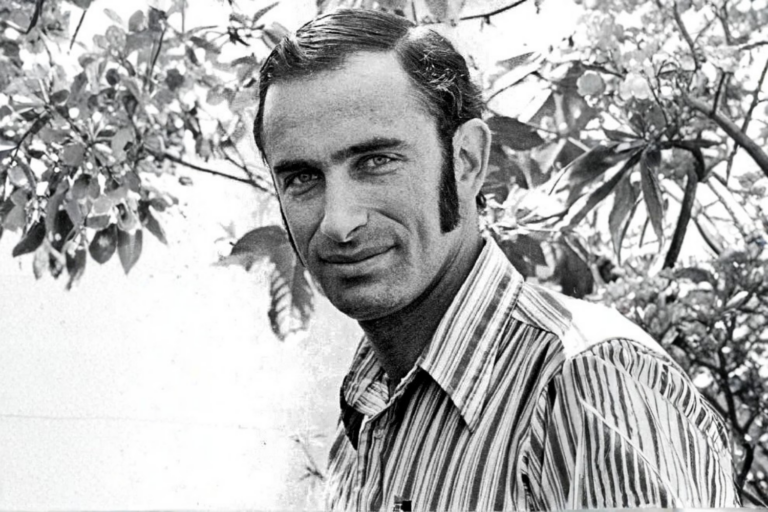

Each year since 1984 the Worldwatch Institute has issued a book called State of the World (STOW), wherein the planet is “given a physical exam,” to use the words of Worldwatch founder and president, Lester R. Brown.
Thus, in early January at the institute’s Washington, D.C. headquarters,1 and at a public briefing a few days later in the Dirksen Senate Office Building, Worldwatch unveiled the 1993 version of State of the World, the tenth volume in the series.2
Once again, as in every one of the nine previous Worldwatch reports, the Earth flunked its ‘physical.’
Degradation and deterioration everywhere
Lester Brown’s lead-off chapter, “A New Era Unfolds,” alleges “land degradation,” “degradation of cropland,” and “degradation of drylands.” Brown bewails “environmental degradation” — a term never defined — twelve times. And then there’s the “deteriorating state of the planet,” the “wholesale deterioration in the earth’s physical condition,” along with the “grasslands [which] are deteriorating,” and “deterioration in humid regions of the world, which includes the U.S. Corn Belt,” and “deterioration in living conditions,” as well as “deteriorating forests,” and “rangeland…deteriorat[ion].”3 Whew!
Brown rounds up all the usual environmental evils, most of them again and again: topsoil erosion (9 times), ozone depletion (8), increased ultraviolet radiation (5), acid rain (3), deforestation (8), overfishing (5), air pollution (11), global warming (4), toxic waste (2), pollution (3), rising sea levels (3), a slowdown in world food output (2), aquifer depletion (2), etc., etc. And then there are the problems of carbon dioxide emissions, species loss, reduced productivity, the spread of hunger, overplowing, increased flooding, greenhouse gases, water scarcity, dying lakes, and so on and so forth.
The cause of it all — and Brown’s solutions
Behind all these, as their ultimate causes, lie human population growth and overpopulation, according to Brown, along with excessive consumption by the United States.
Hence Brown thinks he has the solution to all of Earth’s problems: lots of population control, including “U.S. financial support for the U.N. Population Fund and the International Planned Parenthood Federation,” and lots of tough, new environmental “regulations and tax[es].”4
But before one surrenders to one’s own deterioration and agrees to support those programs and pay those taxes, one should examine some of the ‘facts’ Brown advanced to support his thesis.
Brown claims food output is slowing
In Brown’s view, the principal measurable effect of all those degradations and deteriorations has been that “growth in [world] food output [has been] slowing.”5
According to Brown, “the production of grain…expanded at 3% a year from 1950 until 1984, when per capita output peaked at 344 kilograms. From then until 1992, it grew less than 1% annually, scarcely half the rate of population [growth].” For “soybeans, the world’s leading protein crop, [production] growth averaged 5% from 1950 to 1980 [but] over the next 12 years, it averaged 2% annually.”6
Please note that what Brown alleges is not an outright decrease but rather a decrease in the rate of increase — DITROI, as Ben Wattenberg has termed it.7
The only documentation Brown offers for his claims is a table which he constructed and which purports to compare agricultural production during an earlier “rapid growth period” and the current allegedly “slow growth period.”8
But what is Brown’s source for this table, the centerpiece of his argument? I quote: “Various annual publications of the U.N. Food and Agriculture Organization and unpublished annual printouts from the U.S. Department of Agriculture.”9
Since the UNFAO and the USDA publish hundreds, if not thousands of reports every year, Brown’s ‘documentation’ is hardly informative. When Brown does not give so much as a title, much less a proper citation of author, year and page number, one wonders what he is hiding. Brown’s sources degenerate to nothing more than “trust me.” Or “go find it for yourself, if you can!”
Brown attributes the slower growth to two main causes: “One is that the growth in the use of key inputs — cropland, irrigation water, and fertilizer — has slowed dramatically. And two, the many forms of environmental degradation — soil erosion, aquifer depletion, air pollution, ozone depletion, and hotter summers — are taking a toll on agricultural output.”10
Cropland area declines
Brown is correct in saying that the world’s grain harvested area has “actually declined slightly” in recent years, but that fact is of little or no consequence.
The harvested world cropland area did decline from an all-time peak of some 732 million hectares in 1981, dropping to some 687 million hectares in 1992.11 But the far more meaningful figure regarding harvested acreage is the amount of production, or yield per hectare, a critical statistic that Brown always manages to overlook.
In 1981 total world grain production reached a new record of some 1.48 billion metric tons, which is a yield of 2.02 tons of grain per hectare. In 1992, on a harvested area 45 million hectares smaller than that of 1981, total grain production exceeded 1.75 billion metric tons. The grain yield of some 2.55 metric tons per hectare was a new world record.12
Of what significance is the 6% reduction in harvested cropland area when total world grain production actually increased by over 18% despite the lesser area harvested?
Furthermore, the reduction in world cropland area was entirely due to the actions of the United States and western Europe, both of which deliberately cut back on their cropland due to the large grain stockpiles which they had accumulated. Presently, some 55 million acres of formerly harvested cropland in the United States have been taken out of production,13 while in Europe cropland area was intentionally cut back 1.3% during the 1980’s, making it the only continent to show an actual decrease.14
Although Brown claimed “there is little prospect for markedly increasing the world cropland area during the nineties,”15 in the United States alone (see footnote #13) such acreage could be dramatically increased within a year. Factoring Europe into the picture, a moment’s reflection indicates world cropland could be expanded by some 10% merely by bringing back into production the formerly farmed acreage that has been voluntarily retired in these two “breadbasket areas” of the world.
Meanwhile, in those areas of the world allegedly lacking the ability to feed the populace, cropland areas increased across the board during the past decade: in South America by some 10.9%, in Africa by 4.4%, and even Asia managed to eke out a 0.8% increase.16
Of what significance is the reduction of cropland area in countries already enjoying bountiful harvests and surpluses, while cropland increases occurred simultaneously throughout the rest of the world in the very places allegedly having problems with food supplies?
Decline in fertilizer use and irrigated cropland?
Brown’s claims regarding world fertilizer usage and irrigation are demonstrably false. According to World Resources 1992–3: A Guide to the Global Environment,17 a source known to Brown, the “average annual fertilizer us[age]” throughout the world increased during the decade of the 1980’s from 73 kilograms per hectare of cropland to 97 kilograms per hectare. This worldwide increment of some 32% over the past decade was distributed in the following manner among the continents: South America, a 29% increase, Africa 42%, and Asia, 98%.18
Despite Brown’s claim that “fertilizer [usage] has slowed dramatically” in recent years, World Resources statistics indicate that the 32% increase achieved in world fertilizer usage during the 1980’s was actually a slight acceleration over the increase of 30% that took place between 1974 and 1983.19
North America was the sole continent to record a reduction in fertilizer usage, largely because of the deliberate outback in the United States due to environmental considerations. Indeed, the United States was one of the very few countries in the world to experience a decrease in fertilizer usage. Even Europe, by far the world’s largest user of fertilizer, raised its usage by nearly 1%.20 Similarly, according to World Resources, irrigated cropland areas increased by some 14% during the 1980’s,21 a rate almost double that achieved during the 1974–1983 period.22 Africa, South America and Europe all recorded increases of some 20% in the amount of irrigated croplands, while the increment in Asia was some 10%. Once more, only the North American continent experienced a decline (-10%), again due to a deliberate cutback in the United States.23
Brown ignores record world harvests
The most incredible aspect of Lester Brown’s latest episode of “crying wolf”24 over the alleged “lowering [of] agricultural productivity” throughout the world, is that worldwide record grain and soybean harvests were actually achieved in 1992. Nowhere in Brown’s article or in the STOW 1993 book is there a single word or even a hint of this spectacular achievement. Just more doom and gloom, ad nauseum.
But the real state of affairs regarding current world agriculture is spelled out in the pages of the USDA’s World Grain Situation and World Agricultural Production reports: new world record crops of rice, corn, and soybeans; the second greatest harvest of wheat ever; the second greatest total world grain harvest ever; and a new record average grain yield per harvested hectare.
The world rice harvest totaled almost 520 million metric tons, the corn harvest was 524 million metric tons, and the soybean harvest totaled more than 112 million metric tons. The wheat harvest of more than 556 million metric tons was exceeded only by 1990’s figure of 588 million tons. The world’s total grain harvest exceeded 1,750 million metric tons, just a shade below me 1990 record.25
Although the final magnitude of these harvests was published in mid-January, a few days after the release of STOW 1993, the fact that worldwide record harvests were probable or actually underway, was well known by late summer or autumn in the United States.26 Despite Brown’s claims about the “time-consuming and…demanding” research that goes into producing STOW, and his boast that “references to events as recent as mid-November” appear in the book,27 Brown and his STOW book somehow managed to miss the entire story regarding the good news in world agricultural production.
Slowdown in meat production growth?
Continuing to bewail the alleged slowdown in world food output, Brown claimed that the “Slower growth of grain and soybean production, both of which are used as [animal] feed, helps explain the slowdown in meat production growth from 3.4 percent a year between 1950 and 1986 to 2 percent annually during the following six years.”28 Readers will recognize this claim as just another example of the DITROI argument (above).
Oddly enough, just one year ago in the 1992 edition of STOW, Worldwatch researchers were then complaining about the “numbers and impacts of livestock [which] have swelled apace with human population and affluence.”29 Lamenting the large areas of the world’s cropland now produc[ing] grain for animals,” STOW called upon “rich countries…to reduce their meat consumption while developing nations [should] slow the growth of their meat intake.”30 But when Europe and the United States comply,31 for cholesterol and health considerations, Brown seizes upon the resultant “slowdown” in world meat out-put as having been caused by a grain output slowdown and/or “environmental degradation.”
One way or another, Brown and his Worldwatch crew will try to get you every time!
To paraphrase Ben Wattenberg, the good news about the real state of the world is that the bad news from Lester Brown and company is mostly all wrong.
Endnotes
1 1776 Massachusetts Avenue NW, Washington, D.C. 20036.
2 W. W. Norton & Company, New York and London, 1993.
3 Lester R. Brown, “A New Era Unfolds,” STOW 1993, pp. 3–21.
4 Ibid, pp. 18–21.
5 Ibid, p. 11.
6 Ibid.
7 Ben I. Wattenberg, The Good News Is The Bad News Is Wrong, Simon and Schuster, New York, 1984, pp. 124–7.
8 “A New Era Unfolds,” op cit, p. 11.
9 Ibid.
10 Ibid, pp. 11–12.
11 USDA, World Grain Situation and Outlook, January 1993, Table, World Total Grains, p. 32. (One hectare = 2.47 acres, or 1 acre = 0.405 hectare).
12 Ibid.
13 Brenda Chewning, USDA Agricultural Marketing Specialist, personal communication, April 26, 1993. Cropland “set-aside” acreage has been as high as 78 million acres in 1983, 1987 and 1988. Additionally, year after year, 60 to 70 million acres has remained “fallow, idle, [or used for growing] minor crops, etc.” Total U.S. idled cropland acreage has thus totaled well over 100 million acres annually during most of the past two decades.
14 World Resources 1992–93, The World Resources Institute, Oxford Univ. Press, 1992, Table 17.1, Land Area and Use, p. 263.
15 “A New Era Unfolds,” op cit, p. 12.
16 World Resources 92–93, Table 17.1, pp. 262–3.
17 See Endnote #14.
18 World Resources 92–93, Table 18.2 Agricultural Input 1975–89, pp. 274–5.
19 World Resources 1986, Table 5.2 Agricultural Inputs, 1964–83, pp. 264–5.
20 See Endnote #18.
21 See Endnote #18.
22 See Endnote #19.
23 See Endnote #18.
24 See the author’s articles “Lester Brown’s Grain Reserves Shell Game,” PRI Review, vol. 1, no. 4, July/Aug 1991, and “Worldwatch Wolf Keeps Crying,” PRI Review, vol. 2, no, 2, March/April 1992.
25 See Endnote 11 (Total Grains), and, pp. 17 (Rice), 14 (Corn), and 12 (Wheat) of that report; World Agricultural Production, Nov. 1992, pp. 8 and 40–1 (Soybeans), plus pp. 6–8, 12–23 (Grains).
26 World Agricultural Production, Nov. 1992, ibid, and World Grain Situation and Outlook reports of Sept., Oct., and Nov. 1992.
27 STOW 1993, Acknowledgments, p. viii, and Forward, p. xviii.
28 STOW 1993, p. 11.
29 STOW 1992, “Reforming the Livestock Economy,” pp. 66–82, at 67.
30 Ibid, pp. 69 and 80.
31 World Resources 1992–93, op cit, pp. 276–7. While the United States cut back its cattle herds (-13%), sheep and goats (-7%), and pigs (-11%), and Europe reduced its cattle population (-7%) during the period 1988–90, most nations recorded hefty increases in their livestock numbers.