
Archbishop Coakley Defends Family against LGBT “Gender Ideology”; Introducing “Charley’s Corner,” commemorating Dr. Charles E. Rice’s long years of support for PRI; Jonathan Abbomonte on California’s Suicide Pact
PRI Review
News from Oklahoma, Florida, California And Introducing “Charlie’s Corner”
July 9, 2016
We begin with a welcome message from Archbishop Paul Coakley of Oklahoma City.
Avoiding the usual PC clichés, His Excellency spells out very clearly what we’re up against when confronted with the massive assault on morality that’s been launched by the curious coalition of the Feminist Left, the Obama Administration, and Big Business.
“It’s About More than Restrooms,” Archbishop Coakley tells us. Here’s his report:
Earlier this year I came across an “all gender” restroom in the airport of a large American city. I had never seen such a thing. I snapped a picture. It struck me as strange, certainly not something I would expect to find in Oklahoma, for example. That may be about to change.
The media have been highlighting recent legal attempts in some states to keep boys out of girl’s restrooms and vice versa. This latest restroom controversy is a manifestation of the new battleground over “gender.” This battle, however, is about more than who can use which restroom. According to rules just issued by the Obama administration, public schools ought no longer to differentiate between boys and girls based on their biological sex, but now ought to acknowledge and accept their personal “gender identity.”
This is to be the basis for allowing them to choose which restroom to use. So-called gender identity, according to the gender theorists, is a matter of personal expression rather than biology. Consequently, if a boy self-identifies as a girl, then he ought to be allowed to use the girl’s restroom or locker room in any school that accepts government funding. It doesn’t take long to imagine the bizarre consequences that this way of thinking and establishing public policy and law will have in the future.
Efforts to resist the imposition of this gender ideology are already meeting stiff resistance from the federal government and powerful economic forces that are determined to advance their radical reinterpretation of human personhood and relationships. In recent years, many Americans have been astounded by how rapidly public opinion, cultural standards and laws changed with regard to the acceptance of so-called homosexual marriage.
Today, anyone who questions the appropriateness of equating same-sex unions with traditional marriage is labeled a bigot, a homophobe and a “hater.” Stiff economic penalties and laws are being enacted that threaten individuals, businesses and other associations that dissent from this new radical orthodoxy that is being advanced by a powerful network of special interests.
What proponents called “marriage equality” was just the beginning. Gender ideology is the next tsunami that threatens to sweep away centuries of accepted human wisdom about the complementarity and real differences between men and women.
These differences are not merely about self-expression and personal choice. Science, philosophy, theology and the accumulated wisdom of every culture have recognized that these differences are rooted in something real and objective. They are rooted in biology and more fundamentally, they are rooted in the design of the Creator.
Pope Francis’ recent apostolic exhortation, “The Joy of Love,” acknowledges the threat that this new radical gender ideology poses. It was the subject of much discussion in the recent Synod of bishops on the family. Pope Francis writes, “Yet another challenge is posed by the various forms of an ideology of gender that ‘denies the difference and reciprocity in nature of a man and a woman and envisages a society without sexual differences, thereby eliminating the anthropological basis of the family. This ideology leads to educational programs and legislative enactments that promote a personal identity and emotional intimacy radically separated from the biological difference between male and female. Consequently, human identity becomes the choice of the individual, one that can also change over time.’”
As with every ideology this one asserts itself as beyond dispute and absolute. It envisions a brave new world in which the creature asserts himself as the creator of his own reality. This is demonic. Pope Francis continues, “It is one thing to be understanding of human weakness and the complexities of life, and another to accept ideologies that attempt to sunder what are inseparable aspects of reality. Let us not fall into the sin of trying to replace the Creator. We are creatures, and not omnipotent. Creation is prior to us and must be received as a gift. At the same time, we are called to protect our humanity, and this means, in the first place accepting it and respecting it as it was created”(Amoris Laetitia 56).
I am not an alarmist, but it seems clear to me that battle lines are being drawn very clear. And, these lines are about more than government overreach. This is a spiritual battle between Light and darkness.
Saint Michael the Archangel, defend us in battle!”
Thanks you, Archbishop Coakley, for clearing the air of all the confusion surrounding the culture wars. And Pope Francis spells it out for us – we must accept ourselves as God created us. But how do we know how to put that in practice?
The answer is simple, as spelled out by Thomas Jefferson in the Declaration of Independence. The answer lies in “The laws of Nature and of Nature’s God.”
Well, we know what God’s law is – the Church teaches us as Christ promised the Church would do. But what are “the laws of nature”?
Charlie’s Corner
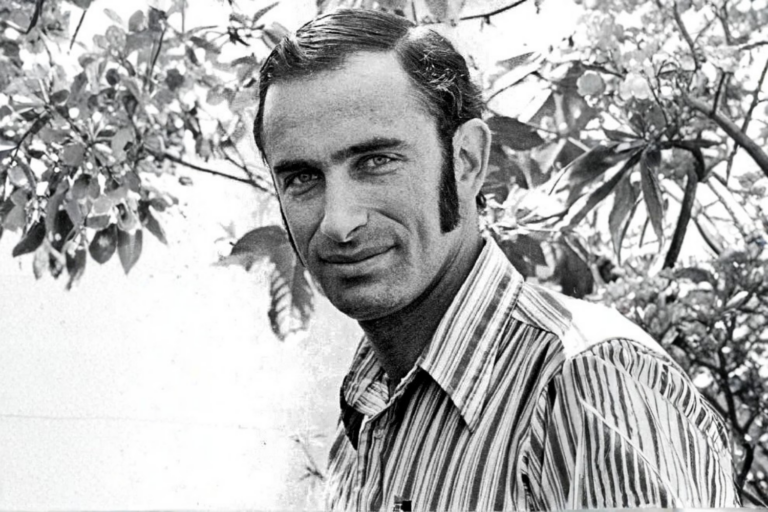
With that question, we introduce today a new feature of our podcasts, “Charlie’s Corner” – named after our friend, colleague, and longtime PRI board chairman Professor Charles E. Rice. His death last year deprived us all of a cheerful and intrepid defender of the Faith. Dr. Rice taught Constitutional Law for thirty-five years at Notre Dame – where I was one of his students. Fortunately, he left for us a wealth of common-sense wisdom that we’ll be sharing with you in future broadcasts.
So let’s get started: here is how Dr. Rice introduces the concept of the natural law.
“Natural law will seem mysterious if we forget that everything has a law built into its nature. The nature of a rock is such that it will sink if you throw it into the pond. An automobile will function if you feed it gasoline. If you put sand in the tank instead you may be sincere in your belief that the car will run but you will end up a pedestrian. The natural law is the story of how things work. If you eat a barbed wire sandwich, it will not be good for you. If you want your body to function well, you ought not to treat it as if it were a trash compactor. Natural law is easy to understand when we are talking about physical nature. But it applies as well in the moral sphere.
Morality is governed by a law built into the nature of man and knowable by reason. Man can know, through the use of his reason, what is in accord with his nature and therefore good. Every law, however, has to have a lawgiver. Let us say upfront that the natural law makes no ultimate sense without God as its author. The natural law is a set of manufacturer’s directions written into our nature so that we can discover through reason how we ought to act. The Ten Commandments, and other prescriptions of the divine law, specify some applications of that natural law…..
“We can know the requirements of the natural law through reason unaided by explicit revelation. But, because of the weakness and disorder caused in our nature by original sin, we are likely to make mistakes; so God has provided revelation to enable us to know with certainty how we ought to act.”
Professor Rice always told his students, “Look at the owners manual. If you don’t follow its instructions, you’ll wind up sitting at the side of the road.”
But a lot of folks don’t like to be told what to do. In the Garden of Eden, Eve was jealous of God’s authority. That fruit was forbidden, yes, but golly –it was beautiful, wasn’t it? It tasted good, didn’t it? And it offered knowledge, didn’t it?
That was enough for Eve – and it’s enough for every fallen creature today.
Note that Pope Francis uses the term “ideology” when speaking of the Gender Lie. “Ideology” is a term of analysis. It doesn’t just mean an everyday “opinion,” it describes a view that deliberately ignores or even denies part of reality.
The so-called “gender ideology” ignores so much of reality that it tells us that a five-year-old can decide whether he is a girl, or if she is a boy. I have yet to see these ideologues address the question, “if she can choose her sexual identity, why can’t a five-year-old girl decide who can enjoy her sexually?”
The very notion is so vulgar that they would flee from the very suggestion – the way they flee from reality.
But ideologies always wallow in contradiction, and quickly cause chaos like that which we are experiencing today. The problem is, they always bring on the hammer of authoritarian power – look at the French Revolution. The Marquis de Sade preached to total sexual enjoyment, liberation, and indulgence, and the mob quickly took him at his word. In the name of fraternité, they killed over a million people, usually in grotesque and Satanic rituals that gave sadism its name.
Archbishop Coakley has it right. Today battle lines are being drawn in a spiritual battle between Light and darkness. When people are intentionally blind to the truth, God allows them to fall deep into the abyss of evil. They might say, “leave me alone, I want to do my own thing” – but as we have learned, their perversion corrupts the common good even as it destroys their souls and sends them into self-indulgent chaos.
When we come back, we’ll hear from a mother in California who wrote her doctor a most heart-rending Letter.
First Break
Second Segment
Now here is a story worth telling. Amazingly, it was actually reported by the ABC news affiliate in Los Angeles, California.
A Florida mother, Courtney Baker, took more than a year to write and mail a letter she had been thinking about since she was pregnant with her daughter with special needs, Emersyn Faith.
Baker told ABC News, “I knew how important it was going to be to write that letter before Emmy was even born.”
With the help of her 15-month-old daughter Emersyn Faith, Mrs. Baker finally dropped the letter in the mail at the end of May to the doctor who she said first told her that her unborn child had Down syndrome.
The doctor, Baker recalls, suggested she terminate her for the pregnancy. Even after she refused, she said she continued to feel pressured.
“Every action from opening and closing the mailbox, to raising the red flag, was closure for me,” Baker said. “I have no idea how the doctor might have reacted to my letter, but I do have faith that God can work any miracle and He can change any heart.”
The letter read: “Dear Doctor, A friend recently told me of when her prenatal specialist would see her child during her sonograms, he would comment, “He’s all perfect.” Once her son was born with Down syndrome, she visited that same doctor. He looked at her little boy and said, ‘I told you. He’s perfect.’
Her story tore me apart. While I was so grateful for my friend’s experience, it filled me with such sorrow because of what I should have had. I wish you would have been that doctor.
I came to you during the most difficult time in my life. I was terrified, anxious and in complete despair. I didn’t know the truth yet about my baby, and that’s what I desperately needed from you. But instead of support and encouragement, you suggested we terminate our child. I told you her name, and you asked us again if we understood how low our quality of life would be with a child with Down syndrome. You suggested we reconsider our decision to continue the pregnancy.
From that first visit, we dreaded our appointments. The most difficult time in my life was made nearly unbearable because you never told me the truth. My child was perfect.
I’m not angry. I’m not bitter. I’m really just sad. I’m sad the tiny beating hearts you see every day don’t fill you with a perpetual awe. I’m sad the intricate details and the miracle of those sweet little fingers and toes, lungs and eyes and ears don’t always give you pause. I’m sad you were so very wrong to say a baby with Down syndrome would decrease our quality of life. And I’m heartbroken you might have said that to a mommy even today. But I’m mostly sad you’ll never have the privilege of knowing my daughter, Emersyn.
Because, you see, Emersyn has not only added to our quality of life, she’s touched the hearts of thousands. She’s given us a purpose and a joy that is impossible to express. She’s given us bigger smiles, more laughter and sweeter kisses than we’ve ever known. She’s opened our eyes to true beauty and pure love.
So my prayer is that no other mommy will have to go through what I did. My prayer is that you, too, will now see true beauty and pure love with every sonogram.
And my prayer is when you see that next baby with Down syndrome lovingly tucked in her mother’s womb, you will look at that mommy and see me then tell her the truth: ‘Your child is perfect.'”
“I hope he sees Emmy, I hope he sees my words on paper,” Baker told ABC News. “Emmy is proof that children with special needs are worthy and can change the world. She’s doing it right now.”
What a courageous woman, what a wonderful family. And yet, eight out of nine babies diagnosed with Downs in the womb are aborted. As Emersyn’s mother points out, too many “experts” consider them to be unfit.
And the same goes for the helpless at the other end of life.
When we come back, we’ll hear of a similar attitude now enshrined in California law, from our own John Abbamonte.
This is PRI Review from Pop.org. We’ll be right back.
Second Break
Third Segment
Jonathan Abbomonte asks an intriguing question.
At what point can we say that a life no longer matters?
Is it at the point when medical expenses become too costly or burdensome for relatives?
In other words, when loved ones make the decision?
Is it at the point when someone feels they have outlived their usefulness, or are just not able to do the things they love to do anymore?
That is, when the individual himself makes the call?
For California lawmakers, it seems that their answer to all these questions would be a resounding “yes.”
Which means that any person, or even his relatives, can decide when the clock has run out and life no longer matters.
They are terribly mistaken, however—all lives matter.
There is never an arbitrary point where one can say, with authority, that they don’t.
We recall how, in Aldous Huxley’s Brave New World, the world controller, Mustapha Mond, arbitrarily set an age at which everyone in that paradise would be sent to die. At age sixty you’re sent to the dying center.
When the work’s protagonist, called the Savage, finds his mother dying and weeps, no one can understand his emotion, his enduring love for his mother. These qualities no longer exist in that Brave New World.
Which is to say that the World Controller treats people like animals, rather than human beings.
Think about it. When you go to the doctor, you will decide which of several possible treatments you are willing to undergo to correct the condition which brought you there in the first place.
That is not the case in the Brave New World. There, the hospital actually resembles a veterinary clinic. You know, you bring your sick pet to be examined, and the vet diagnoses the problem. But the vet doesn’t ask your pet which treatment he prefers, the vet asks you, the owner.
How curious that in the name of “progress,” the Left treats people increasingly like animals. Consider their approach to sex: “the world is a wide-open barnyard, and anything goes. Have fun exploring your gender!”
And so it goes in California’s barnyard. Mr. Abbamonte reports that the assisted suicide law passed by the California legislature last year, euphemistically titled the “End of Life Option Act,” takes effect this month. The law makes it legal for doctors to prescribe lethal drugs to patients who request them. And it’s not hard to “qualify” for them either.
While assisted suicide has been legal for decades in Oregon, and for several years in other states like Washington and Vermont, the new California law ups the ante.
The number of assisted deaths might well rise by a factor of three among California’s population of 40 million.
To qualify for the lethal drugs under the new law, patients must meet three requirements:
They must be a California resident; they must suffer from a terminal illness with a life expectancy of less than six months; and they must be capable of making an informed decision free of any mental disorders or obvious outside pressure from relatives to end their life.
These requirements are hardly what we would call airtight. Quite the contrary: they are intentionally written to open the door as wide as possible to more euthanasia.
The law requires patients to make only two verbal requests, fifteen days apart, and one written request in order to receive the life-ending drugs.
California’s new law is flagrantly unethical, Mr. Abbamonte observes, but to the Left, anybody is ethical as long as he’s not in jail. And to some of them, even jail is unethical.
But the law will have harmful consequences, some of them obvious and some which will rot the social fabric invisibly, below the surface.
First, and most importantly, the law authorizes a state-sanctioned procedure for ending the life of the terminally ill. It arguably authorizes murder, since murder is defined as the killing of an innocent human being.
Doctors, hospitals, patients, family members of patients, and society at-large will all be complicit in the murder of the terminally ill.
Here it is important to note that, in the tradition of American law, it is not up to the legislator to decide whether or not murder is a crime. The Fifth Commandment, in the original Hebrew, says “thou shalt do no murder.” The legislator cannot reverse that Commandment, he merely legislates the punishment for murder. The crime of murder is taken for granted by any civilized society.
But we’re talking here about California.
And this law legalizing assisted suicide will fundamentally change medical ethics not only in the Golden State, but in the rest of the country as well.
Assisted suicide is diametrically opposed to the principle of refusing to hasten death, a principle which has long been the bedrock of medical ethics. “First, do no harm.”
The original version of the Hippocratic Oath specifically prohibited assisted death. For millennia, doctors have sworn to “not give a lethal drug to anyone if I am asked, nor will I advise such a plan.” That is all about to change now; the Oath will either be changed or ignored, defeating its purpose.
Doctors and medical ethicists will be forced to re-evaluate where they stand on the issue. Those who choose to become involved with helping to kill the terminally ill will undoubtedly need to invent a new standard of “ethics” to justify their killing.
And, of course, those who choose freely not to be involved can expect the usual tsunami of lawsuits, discrimination, loss of opportunity and even loss of their professional credentials.
One principle of American law used to be that the average person can easily tell what is permitted and what is not. But not in California.
Mr. Abbamonte asks, where will the line will be drawn between what is acceptable and what is not? Wherever that line is drawn, odds are it will shift over time.
Will the line remain at patients with an estimated six months to live? But why six months? The number is rather arbitrary in the grand scheme of things. Why not nine months? Twelve? Why won’t patients who are completely paralyzed and unable to self-administer the deadly barbiturates qualify? Mental disorders like bipolar disorder are commonly diagnosed on a spectrum. How far along the bipolar spectrum must patients be in order to qualify?
Don’t count on the medical community to insist unclear standards. Those groups have been politicized for decades. And for the truly ethical practitioners, the threat of national healthcare puts the writing on the wall. Go along or get out.
These new rules will not be drawn by the cautious, but by the most active of the assisted suicide providers. (I hesitate to call them “doctors.”) Once these providers become accustomed to deciding who can and cannot be killed, they will begin adding exceptions to the list of people who qualify for assisted death.
The law’s proponents often point to the fact that assisted killing will only be made available for the terminally ill who want to die and will not affect people like the elderly and the disabled. But why is it acceptable to target the terminally ill?
We must recall that, in tyrannies like the Soviet Union, dissenters were placed in mental hospitals. It was for their own good, of course.
In George Orwell’s 1984, a novel which all of us need to reread every few years, the torture chambers were located in the Ministry of Love
Next, Mr. Abbamonte asks, who made the California state legislature the arbiter of which lives may or may not be worth living?
Is a very good question. You will be shocked, I am sure, to hear that the Constitution of California still begins with this preamble:
We, the People of the State of California, grateful to Almighty God for our freedom, in order to secure and perpetuate its blessings, do establish this Constitution.
“Grateful to Almighty God”? How did that get in there? Well, the Constitution of virtually every state in the union – I think there’s one that doesn’t qualify – contains a similar phrase.
And for what, pray tell, should we be grateful? Well, the Declaration of Independence bases our rights on “the Laws of Nature and of Nature’s God.”
Including the right to life.
Sure enough, Article One of the Constitution of California reads as follows:
All people are by nature free and independent and have inalienable rights. Among these are enjoying and defending life and liberty, acquiring, possessing, and protecting property, and pursuing and obtaining safety, happiness, and privacy.
This is revolutionary – the Constitution of California still believes in human nature! So much for gender ideology – but, hey! Who cares! Who reads constitutions anyway?
So all the people of California by nature have the inalienable right to enjoy and defend life and liberty.
So it stands to reason, Mr. Abbamonte observes: rather than selecting a subset of the population–in this case the terminally ill–for assisted death, all life should be defended and respected, without regard to age, socioeconomic status, or health condition.
Moreover, may I add, those rights should be defended by everyone, because that burden is placed on us by our human nature itself – the Laws of Nature and of Nature’s God
All people, especially the terminally ill, have dignity – we are made in the image and likeness of God.
So it is unnatural for society to tell certain Californians – those who a third party deems eligible – that they might want to consider killing themselves.
Cast your memory back to Brave New World. Very quickly, the choice will not be voluntary.
Doesn’t such official encouragement to suicide just increase the suffering of the terminally ill? Of course it does. But remember the veterinary clinic. The doctor is conferring with the family under the guidance of the legislature, “what shall we do with this sick animal?”
Supporters of the new law claim that there are numerous “safeguards” written into the law. But how sufficient are these supposed “safeguards?”– not to mention the fact that supposed “safeguards” in the Oregon law have been flaunted for decades.
In other words, there are no safeguards at all.
One of the supposed “safeguards” in the California law requires the screening of patients for mental disorders that could impair their judgment. Patients who request assisted death must have the “physical and mental ability to self-administer” the lethal drugs.
Correct diagnosis of a mental disorder, however, can be tricky – and remember the Soviet Union, where critics of the regime were quickly declared to be insane.
According to the California law, it is up to the attending physician to determine whether it is “necessary” to refer his patient to a specialist to screen for mental disorders. In other words, if the attending physician does not think a mental evaluation is necessary, no evaluation will ever take place.
How many people with mental disorders could be killed as a result of this policy? It is difficult to say. But a recent study published in The Lancet found that general practitioners, on average, were only able to correctly diagnose major depression in their patients less than 50% of the time They incorrectly determined that their patients were not suffering from depression (when in fact they really were) almost 15% of the time. [1]
Mr. Abbamonte continues with some intriguing analysis. Yes, the new California law also attempts to prevent patients from regretting their decision by requiring that the verbal requests be spaced at least fifteen days apart. Fifteen days, however, is not a sufficient length of time to establish a consistent intention. Studies show that the average length of a major depressive episode lasts about 3 months.[2] Episodes last longer than 21 months for every one out of five people living with depression. Even depressive moods for people not suffering from major depression can last over two weeks.
But even if no symptoms of depression are present, those who take lethal drugs eventually regret their decision – if they survive. People who survive suicide attempts are nearly always thankful that they survived, and often say the worst part of the whole experience is the regret they felt after having made the decision, and having no way of avoiding death.
Panic is a common symptom that people experience after ingesting the deadly barbiturates the suicide pills contain. Unfortunately, after ingesting the lethal drugs, there is nothing a patient can do to reverse his decision. So much for providing safeguards against regret.
Another so-called safeguard concerns conscience rights. While the California law includes a few limited conscious protections, they fail to go far enough, especially for faith-based institutions like Catholic hospitals.
The law does not require health care providers who object to assisted suicide to administer lethal drugs or to give referrals.
Hospitals that object to assisted suicide can prohibit their employees or independent contractors from participating in assisted suicide, and can terminate or censure employees that violate the hospital’s policy.
At the same time, however, health care providers are not allowed to prohibit employees from participating in assisted suicide at other institutions with which they may be affiliated – nor can they prevent them from making referrals.
So, for example, a Catholic hospital that decides not to offer assisted suicide services because it violates Catholic moral teaching would not be able to disassociate itself from a certain employee who is involved with assisted suicide at a public hospital on the other side of town.
The same Catholic hospital would also not be able to prevent its employees from offering patients referrals or information on how to obtain lethal drugs. Forcing institutions to act as middlemen in assisted suicide cases constitutes a clear violation of conscience rights and the religious liberty guaranteed by the Constitutions of California and of the United States.
Moreover, the law ignores the real reasons why many people seek assisted suicide in the first place.
And speaking of safeguards, here the law is, once again, sorely lacking.
California lawmakers assume that someone is giving informed consent of their own will simply because they sign a form. But motives can often be disguised, and a signature on a form does not suffice to assure that a patient’s decision is not coerced.
The law’s provision for a single private meeting with a doctor to discuss the patient’s motives in asking for assisted suicide is also insufficient.
Expecting doctors to get to the bottom of what is causing patients to ask for assisted suicide in a five-minute conversation is not only foolhardy, it’s irrational. How can a doctor assess the numerous complex factors that lead some terminally ill patients to ask for assisted suicide in a brief conversation?
Patients may be unwilling or uncomfortable to discuss their true motivations. Terminally ill patients may not even be aware of some of the underlying causes leading them to consider suicide. What patients say they want and what they actually want can be two very different things, especially when clinical depression is involved.
People can also be manipulated and controlled. Some may have been conditioned by family, friends, or society to think that death is the best option for them, even if it is not really what they want. The coercion does not have to be overt. People can be coerced through implied thoughts and views expressed in attitudes or suggestive manners of speech from relatives, friends, or health care providers. Those suffering from terminal illnesses can be made to believe that they are a burden to their family without a word being said.
Legalizing assisted suicide places some of the most vulnerable members of society at risk. Terminally-ill patients suffering from even a brief depressive episode can sometimes “see” signs that their relatives are tired of caring for them even when this is not the case.
People know when they’re not wanted, but the emotionally weak often believe they are “unwanted” even when it isn’t true. For the terminally ill, especially those saddened or afraid of what lies ahead, these are powerful and coercive motivators to consider assisted death.
Let’s take at another field of law in California. When a person dies, relatives and other prospective heirs can contest a revision to a will on the grounds that the revision was signed under duress, or that the new will was signed when the individual was mentally incapable of understanding its contents due to dementia or advanced stages of disease.
There are dozens of courts throughout California constituted to address these legal issues thoroughly. They are called probate courts. They demand evidence. They demand testimony. They carefully review all documents.
And consider: a will deals merely with distribution of goods. If these long-standing procedures are required to adjudicate material goods, shouldn’t California be even more careful when dealing with life itself?
As Mr. Abbamonte observes, patients who ask for assisted suicide in these scenarios cannot be said to give informed consent of their own will, but under California’s assisted suicide protocols, we will never know the underlying causes.
There is nothing compassionate about selecting what kinds of lives may not be worth living. Every human life has dignity and is worth living. Assisted suicide laws in the United States are an affront to human dignity.
They should be rescinded.
This is PRI Review from Pop.org. Thanks for listening.
[1] A. J. Mitchell, A. Vaze, S. Rao, “Clinical diagnosis of depression in primary care: a meta-analysis,” Lancet 2009; 374(9690): 609-619.
[2] Jan Spijker, Ron de Graaf, Rob V. Bijl, Aartjan T. F. Beekman, Johan Ormel and Willem A. Nolen, “Duration of major depressive episodes in the general population: results from The Netherlands Mental Health Survey and Study (NEMESIS),” BPJ 2002; 181:208-213.