
The United Nations celebrates the 50th Anniversary of the Universal Declaration of Human rights this year, a celebration marked with more than a little irony for the people and organizations which have suffered under or fought against the worldwide population control agenda. But given the fact of the celebration it is appropriate to offer some brief thoughts on just what the Universal Declaration has and has not meant to the world’s poor — particularly to poor women who are the chief targets of the global population control effort.
A person in the wake of a binge often turns strongly, for a while, away from drinking. So too did an idealistic international coalition turn away from the blood-soaked years which preceded 1948. Less than three years earlier American cameras had recorded for eternity the hollow eyes of Buchenwald’s incredulous survivors, and in the blink of an eye, whole Japanese cities had been wiped from the face of the earth. Since almost the birth of the century, humanity itself had become little more than a pawn of competing ideology. Whether by starving kulaks in the Ukraine, rounding up Jews in Warsaw, raping Chinese girls in Nanking or leaving elderly Japanese to die interned in California, Declaration authors hoped humanity had at last finished gorging itself on carnage.
Yet the passing years reveal the UN’s comprehension of the document lagged behind its authors’ idealism. The spirit of the 1948 signatories was willing enough, but later UN moral and intellectual commitment to the ideal was weak. Post-Declaration UN activities revealed that the organization lacked the crucial understanding needed if it hoped to really become voice for individual rights in what remained a savage world. The recognition of the “inherent dignity” of human rights, the document proclaims, serves as “the foundation of freedom.” Forming this foundation, these human rights may never be seen as mere adjuncts to some larger agenda even one enacted in the name of improving humanity’s lot. In the end humanity’s most important question is not whether fascism or communism, socialism or capitalism, environmentalism, feminism, materialism or multiculturalism prevail. The most important question is whether our “global village” recognizes that in a contest between any of these ideologies and the authentic rights that cradle human freedom, the rights win. No ideology, no cause, can be viewed as so important, good or necessary for a broader human society that it justifies the State, or for that matter the UN, routinely trampling the inherent dignity of individual human beings.
This failure to confront ideology’s central role in creating its agenda has led the United Nations to stray far and wide from the “faith in fundamental human rights” the Universal Declaration envisions. The current UN interpretation of the Declaration lacks the deep and abiding renunciation of ideology — the totalitarian ‘isms’ — which continue to dominate the world‘s intellectual debate and struggle. Particularly when devoted to the ideological position that the world contains, or may soon contain, “too many people,” the United Nations and other international institutions have chosen, either passively or actively, to take the side of ideology over human rights.
The UN and China
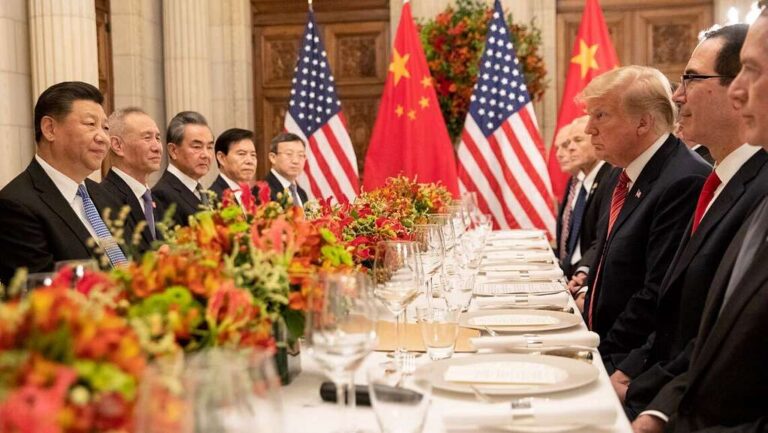
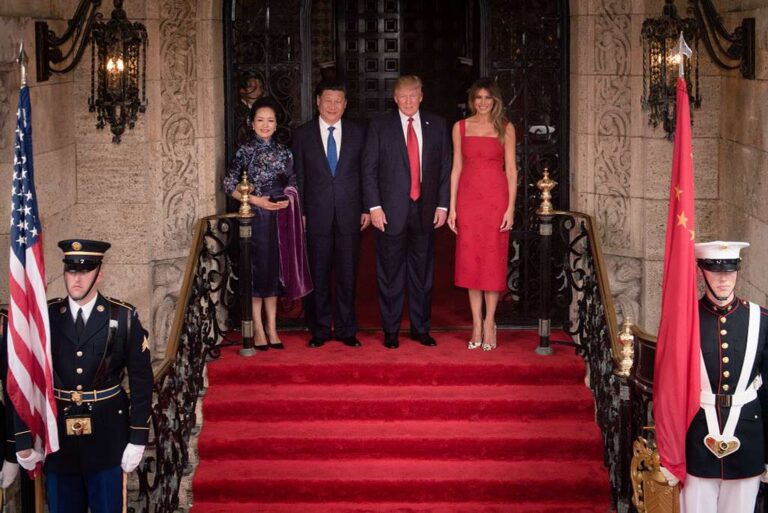
China Consider for a moment the case of the United Nations and China. Although China remains only one of the more than 30 nations which have chosen to sacrifice their citizens’ human rights on the altar of alleged overpopulation, its so-called ‘”family planning” program is still the largest, most comprehensive and, in many ways, the most egregious. Two generations of Chinese men and women have been forced at the point of fine, imprisonment or loss of home, to accept either abortion or coerced sterilization. How are they to understand the Declaration’s 16th article that recognizes that “men and women… have the right to marry and to found a family?” How should Chi An, a 38 year old Chinese mother living temporarily in the United States (whose story PRI President Steven Mosher documented) have thought about the Universal Declaration when the letter demanding that she abort her second child arrived from her “family planning” office in China? What can the words ‘“right to marry and found a family,” have meant to her? Of course it would be unjust to lay the responsibility for China’s population control brutality at the UN’s door if, for example, the UN Secretary General or even the United Nations Population Fund (UNFPA) had worked to overturn the policy or had at the very least denounced it. But they have not. Instead the United Nations has not only remained silent but cooperated with the policy.
Supporting the horror?
Take, for example, the publication Training Family Planning Counselors in China, jointly published by UNFPA, the Chinese government’s State Family Planning Commission, and the Program for Appropriate Technology in Health (PATH), which the US Government currently funds to the tune of $34 million. In glowing terms the authors describe a program of “training the trainers” of rural “family planning programs.” The program stresses, the book says, developing the “interpersonal communication and counseling” skills of family planning workers, presumably so Chinese women can be more gently guided to the same inevitable conclusions they would have previously made under bullying, intimidation and threats.
The UNFPA does not stop there. In early 1998 the UN’s population control arm announced that it would spend $20 million in an “experiment.” Women in 32 Chinese counties, where the UNFPA will allegedly soften the program, will no longer be forced to formally ask permission to give birth. They are not however, freed, from having to run the gauntlet of other, more subtle, pressures to conform to the official “family planning” policy which remains unchanged and which the UNFPA endorses by its silence. This UNFPA presents as a clear improvement and even, in some sense, as progress. “The government of China is keen to move away from its administrative approach to family planning to an integrated, client centered approach,” said Kerstin Trone, a UNFPA program director. Yet the implementation mechanism, and not the policy, has changed. How does “merely” cooperating with a government policy which tramples human rights honor the Declaration from which the United Nations is meant to draw both its authority and spirit? Doesn’t the UNFPA and the United Nations overall also have a responsibility to the women in China’s other counties who still Pace forced abortion, forced sterilization, mobile abortion vans (the prototype for more than 600 was unveiled at a 1997 international population meeting in Beijing) and other horrors? What is the UN responsibility, in the spirit of the Declaration, to the women of Tibet who have begun to suffer under the one — child policy?
China not alone
Unfortunately, Tibetan women should probably not look for any help from the UN for their plight. UNFPA around the world is known for being far more interested in controlling women’s fertility than in advancing their authentic human rights. Consider just these examples.
In Peru, PRI investigators brought to light the horrific details of a massive coercive sterilization campaign which has put tens of thousands of Peruvian women at risk for fatal infection and has killed at least 18. The modus operandi of this campaign has remained the same in dozens of small villages and poor neighborhoods across the country. The poorer houses or homes where women have more than two or three children are identified and targeted by Ministry of Health workers who begin to visit over and over again to demand the women submit to the procedure. In some cases poor women are offered food, clothing, and other supplies for themselves and their families on the condition they agree to accept sterilization. In one case a woman reported her child had been enrolled in a nutrition program and then expelled when her mother refused sterilization. The sterilization campaign only finally “collapsed.” the government recently reported, after tens of thousands of women who had been alerted to what was going on refused to participate.
But surely, UN defenders will say, the United Nations was not responsible for that program; but UNFPA is responsible for helping create and build the infrastructure and attitude that made the program possible. When one of the women who had fought for months against being sterilized. Juana Chero of the tiny hamlet of La Quinta, finally succumbed and was taken off for a fatal medical procedure she was taken to a building which a bore a prominent plaque: “project of the UNFPA.” And yet, UNFPA has offered no comment on the government’s coercive sterilization campaign.
Other cases abound. Where was the principled position, taken on the basis of the Universal Declaration, when Indian women were coerced or bribed in Kerala, India, into accepting a sterilization procedure which took place under worse than veterinary conditions? As documented in Reproductive Health Matters first and then reported in PRI Review, the women were bribed and coerced into having a procedure had operated on three at a time and their leaving the room under their own power and to lay on sheets on a filthy floor during the “post-operative” period. On average each surgery two minutes and 40 seconds to complete.
Similarly, nothing was said about the way women in Haiti and Bangladesh were treated by population control programs in their countries. As documented by the British Broadcasting Service’s Horizon program, women in Haiti and Bangladesh were lied to about Norplant as part of an alleged research protocol. Without informed consent they were inserted with the device that made many of them very ill — even to the point of threatening their lives in many cases, but when they returned to ask for removal they were refused. Later reports based on this “research” concluded “Norplant is a contraceptive method well suited” to Haitian and Bangladeshi women.
It would have fallen under the purview of the World Health Organization (WHO), UNFPA, or the UN generally to at least protest, but no protest was heard. Nor were protests heard from the WHO when, in the 1970’s, The US Agency For International Development (USAID) arranged for the discount purchase and shipment of 70,000 potentially lethal intrauterine devices (Dalkon Shields) unsterilized into the developing world. The women inserted with those IUD’s, those blinded after having Norplant inserted, forced to accept unsanitary sterilization were among the poorest and weakest in the world, the ones whose rights are among the easiest to ignore and for whom the Universal Declaration cannot be taken for granted. The UN has the obligation, by its own charter, to defend the human rights of every individual. This obligation applies in particular to the poorest of the poor — those who have no other voice or advocate.
Seeing the pattern
These are only a few cases of what has been an ongoing international pattern for more than 30 years. Any so-called “family planning” program in the world today that is not coercive must be considered a nearly complete aberration — the exception, in the words of the aphorism, that proves the rule. But what should we say of the UN’s role in all this? The last 30 years have seen the rise of an enormous superstructure of reinforcing ideology supporting the population control myths. The United Nations, governments, foundations, NGO’s, much of the international media and many universities now have an interest in reasserting the alleged and specious link between lower birth-rates and economic prosperity. In many cases this ideological blindness has meant parts of the UN which favor population control have been at odds with parts of the organization which take a more objective view of the situation. UNFPA, for example, often asserts expected levels of population growth which are at odds with the projections published by the United Nations Population Division, and international demographers meeting recently in New York discussed not the problems of too many people but of too few.
Certainly all these atrocities are not the fault of one organization, even a global one. But, in light of the Universal Declaration whose 50th anniversary the UN celebrates this year, the organization bears a unique role in declaring and defending the value of authentic human rights a role which its ongoing commitment to population control ideology prevents it from assuming. In fact, the failure to eschew this ideology has led the organization to, at best, passively sit by while women arc abused or, at worst, to actually facilitate and applaud the abusive programs. Population control ideology has rendered the Universal Declaration a defacto lie.
David Morrison is the managing director of the Population Research Institute and writes from the Washington DC area.