
Did the United States government play a role in the proposed legalization of abortion in Nigeria?
There is much to suggest that it did — both directly and indirectly.
On 22 August 1991, Nigerian Minister of Health Olikoye Ransome-Kuti, told a press conference in Lagos that the demographic situation in Nigeria may make it necessary to legalize abortions. The official stated that nearly half of Nigeria’s population is under the age of 20, and that a high pregnancy rate among this group would create hardship for the country.1
Ransome-Kuti also cited an increase in teen pregnancies among Nigerians, and argued that laws against abortions merely drive women to dangerous, illegal, back-alley abortionists.2
Nigeria is ruled by a military government, which has promised a transition to democratically-elected leadership before the end of 1992. Elections are occurring in stages, with voting for new local and municipal leaders having begun this year, and state elections to be held in early 1992. No date has been set for election of a new president and vice-president, but the national election is most likely to be held in late summer or early fall of next year. Before that time, a decision on the abortion proposal could be made by Nigeria’s 28-member Armed Forces Ruling Council.
Although the Health Minister’s comments were given front-page headlines in newspapers for Nigerians abroad, they received very little publicity at home. Moreover, there is a general feeling in Nigeria that strenuous protest against pronouncements by any government official might have the effect of jeopardizing the transition to democracy. In other words, Ransome-Kuti could not have picked a better time to make his push for a permissive abortion law.
The trick has not gone unnoticed in Nigeria. “Last year, we alerted the nation on the plans of the military to legalize abortion before they retire to the barracks,” says an editorial in the Leader, a Catholic newspaper published in Owerri. “Health Minister Professor Olikoye Ransome-Kuti’s recent call on the government to legalize abortion clearly indicates that the plan is about to be consummated.”3
A mere four years ago, legal abortion was virtually unthinkable in Nigeria. Even contraception was something that “polite” people would not openly discuss. Indeed, as recently as two years ago, the Nigerian Planned Parenthood affiliate, Planned Parenthood Federation of Nigeria (PPFN), was forced to publicly defend itself against allegations that it promoted the sale and use of “contraceptives” that were abortifacient in nature.
An article in December, 1989 issue of PPFN’s Planfed News reported that outgoing PPFN executive director Abayomi Fajobi had “denounced rumors to the effect that these methods induce early abortion, for according to him, ‘they have been tested, verified and well documented in all developed countries as well as international agencies including the WHO and the IPPF’ and that ‘the Federal Government which allows their importation into this country is sure of their safety.’”
The article also stated that PPFN “as an organization has never and does not encourage abortion.” The newsletter also vigorously denied that the group had any long-term plan “to soften our deep set cultural values towards life, towards the eventual introduction of an abortion-on-demand legislation.”
The change that has occurred in Nigeria since the mid-1980s has been almost incredible.
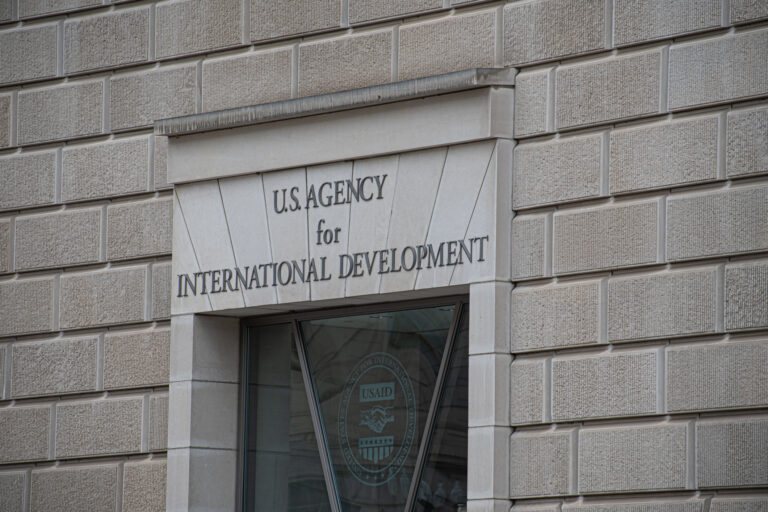
Nigeria’s Armed Forces Ruling Council in February of 1988 approved an official population policy, which almost everyone knows was prompted by pressure from the U.S. Agency for International Development (USAID), various United Nations agencies, and international lenders such as the World Bank and IMF.
In fact, USAID’s Office of Population has a special policy development branch which accounts for approximately 20 percent of all population control expenditures.4 Its sole purpose is the study and promotion of population policies in less-developed nations.
One of these projects, the $2 million “Expert Studies on Population Issues” project, is under contract to the National Academy of Sciences. Its objective is to help “foreign researchers, policy makers, development specialists, and population program managers .…learn about important population issues in relation to social and economic development.”5 A $3.5 million program, administered for AID by the Population Reference Bureau, is intended to “increase the awareness among policymakers in developing countries and the donor community about the implications of population trends and family planning issues.” The program includes the “effective dissemination of population information,” internship, and a “visitors’ program for developing country officials passing through Washington, D.C.”6 A third program, titled “RAPID” or “Resources for Awareness of Population Impacts on Development,” is administered by the Futures Group, and funded under an AID grant of $12.7 million between September 1987 and September 1992. It is intended to “raise leadership awareness of relationships between population growth and development and about the positive socio-economic and health effects of lower fertility.”7 A second AID-Futures Group population policy contract, the $12.8 million “Options” program, is described by AID literature as an effort to assist less-developed nations in “formulating and implementing population policies that increase access to and use of voluntary family planning services.” Its objectives are to promote “policy dialogue and to secure commitment to family planning” within both public and private sectors, to “remove legal and regulatory barriers to family planning,” and to persuade national leaders to “articulate comprehensive national population policies that endorse and encourage family planning,” according to a directory of AID population projects.8
The use of a “policy dialogue” to achieve legal change and the reallocation of public resources in less-developed countries is not unique to AID. The World Bank, too, uses a “policy dialogue” process to compel borrowing countries to curb population growth.
The Nigerian abortion proposal, in fact, came only about two months after the approval of a $73.5 World Bank loan,9 granted in May of 1991, for implementation of Nigeria’s population policy goals. A brief description of the loan appears in the Bank’s 1991 annual report: “This long-range project seeks to strengthen the institutional framework and expand the basis for undertaking a large-scale, intersectoral national population program over the coming decades in fulfillment of Nigeria’s ambitious population policy goals.”10 A separate $70 million loan was also approved during the past year under the World Bank’s “population, health and nutrition” lending program.
Unlike population activities funded with U.S. government foreign aid money, there are no prohibitions against the use of World Bank funds for the procurement of abortions, nor is the Bank prohibited from “coaxing” foreign countries to legalize abortion.
Nonetheless, the United States exercises considerable leverage over the Bank’s lending agreements. A division of the U.S. Department of the Treasury, the National Advisory Council on International Monetary and Financial Policies (NAC), is responsible for monitoring and coordinating U.S. participation in international financial institutions such as the World Bank, the International Monetary Fund, and regional development banks in order “to ensure that, to the maximum extent possible, their operations are conducted in a manner consistent with U.S. policies and objectives and with the lending and other foreign financial activities of U.S. government agencies.”11 A 1978 report by the General Accounting Office notes that U.S. influence in multilateral development institutions is “predominantly measured by how much funding the United States provides to these institutions.”12 Quoting the NAC, it adds that “U.S. funding decisions must provide for support which does not fall below levels at which U.S. influence would not be adequate to defend or promote our interests or where the multilateral structure … could be weakened.”13
At the end of the mid-1991 reporting period, Nigeria owed (including the $140.5 million IDA population sector credits) more than $6 billion to the World Bank.14 An additional $319 million was approved by the International Monetary Fund (IMF) in the year ending April 1991.15 The IMF offers short-term loans only, and does not divide them into sectors, as does the World Bank. Nonetheless, virtually all of these loans are granted under the condition that the borrowing country put in place a development program that conforms to standards dictated by the lending institutions. In other words, population control can be virtually forced upon less-developed countries under the terms of monetary transactions, regardless of whether those funds are earmarked for a particular population-related purpose or not.
Even private lending (commercial banks) can be subject to conditionality. Paul H. Boeker, an assistant to the Secretary of State during the Carter years and a senior economist on the State Department’s Policy Planning Staff under Reagan, writes in an official publication of the Foreign Service Institute that “the most important thing commercial bankers can do to encourage borrowing countries to put forward effective domestic policies is to discriminate among the countries they lend to.”16
The U.S. suspended contributions to the United Nations Population Fund (UNFPA), largely because of its support for a “one-child” population program in China that is widely believed to involve forced abortions and sterilizations. Nonetheless, it continues to contribute to a number of other U.N. agencies that implement UNFPA projects, including the World Health Organization, International Labor Organization, U.N. Development Programme, and others.
The role of UNFPA in supporting the Nigerian pro-abortion initiative is not clear. But it is a well-documented fact that the United States played the major role in the creation of that UN body, and it seems likely that if U.S. leaders genuinely objected to the promotion of abortion and coercive population control in developing countries, they could have used the nation’s enormous influence at the U.N. to bar that agency from funding such activities, or even to abolish it entirely.
Private organizations and foundations based in the U.S. have contributed heavily to population control activities in developing countries. On 5 September 1983, the New York Times reported that two of the nation’s largest private donors were beginning multi-billion-dollar campaigns to “curb unwanted population growth in Asia, Africa and Latin America.”17 The article reported that the MacArthur Foundation in Chicago had announced that it would increase its commitments to population control from an annual $1.5 million to about $23 million a year. The California-based David and Lucile Packard Foundation would provide about $10 million, the Times said, up from less than $1 million in previous years. Several other foundations, including Rockefeller, Ford, Mellon, William and Flora Hewlett, the Carnegie Corporation, and the Pew Charitable Trust are all expected to provide grants for population activities overseas ranging from slightly over $1 million to more than $10 million yearly, according to the Times. Most of these donors have demonstrated their commitment to abortion by their support for U.S.-based pro-abortion groups.
Some non-governmental organizations, too, assist in the provision of abortion services in developing countries. One example is the International Projects Assistance Services (IPAS), located in North Carolina, a non-profit group which specializes in what it calls “abortion-related care.”18 The group’s 1989 annual report lists among its major contributors Family Planning International Assistance,19 an offshoot of the Planned Parenthood Federation of America that was created to serve as a conduit of AID funds to overseas population projects, and which receives almost all of its funding from the U.S. government.
While money supplied by private donors and non-governmental organizations is not the same thing as direct U.S. government involvement, these groups for the most part enjoy the advantage of tax-exempt status — which is an indirect subsidy.
Nigeria Objects
by Lawrence Adekoya, KCSS
The Nigerian public woke up to a rude shock on 22 August, 1991 when the Federal Minister of Health, Prof. Olikoye Ransome-Kuti, dropped the hint in Lagos that the Military Government was considering legalizing abortion in Nigeria.
The minister’s statement was a part of a planned escalation which has been well orchestrated, with a crescendo that would make any questioning mind wonder what was behind it all. For many months the public had been treated to the build-up of a preparatory and public-reaction-softening campaign. Hardly did any month pass without one foreign “expert” or representative of an international organization dropping a hint of how badly Nigeria was doing because of a purported population explosion. The latest item in the agenda of fear, before the Minister let the cat out of the bag, was that Nigeria was becoming the 13th poorest country in the world.
There is in this country a powerful lobby backed up by foreign assistance with the objective of ensuring that the Federal Military Government, under president Ibrahim Badamosi Babangida, legalize abortion by decree.
We have incontrovertible information on an American plan to trim the size of the world to a manageable level. In 1974, the U.S. government commissioned a confidential study on the implications of population growth for “US Security and Overseas Interests.” In the nearly 250-page report that followed the study, Nigeria was identified as one of the “13 key countries” in which there is “special US political and strategic interest.” That document — which is now declassified but not widely known — suggests, among other things, the need to step up family-planning campaigns that would drastically reduce the fertility of women in developing countries.
Contrary to the view of the Minister of Health, there is every reason not to legalize abortion in Nigeria. The morality of it apart, there is an abundance of scientific evidence that abortion harms women physically and psychologically. Several studies have continued that serious complications can follow induced abortions, such as ectopic pregnancies, hemorrhage, perforation of the uterus, sterility, infection, placenta previa, miscarriages, and so on. A World Health Organization technical report from as far back as 1970 stated, “there is no doubt that the termination of a pregnancy may precipitate a serious psychoneurotic or even psychotic reaction in a susceptible individual.”
Nigerians should write strongly worded letters to the Federal Minister of Health and to the President to show their opposition to and indignation at this cruel proposal in a country that is blessed with abundant natural resources.
Whatever may be done to guard against interruptions of supply…the U.S. economy will require large and increasing amounts of minerals from abroad, especially from less developed countries. That fact gives the U.S. enhanced interest in the political, economic, and social stability of the supplying countries. Wherever a lessening of population pressures through reduced birth rates can increase the prospects for such stability, population policy becomes relevant to resource supplies and to the economic interests of the United States.
Implications for Worldwide Population Growth For U.S. Security and Overseas Interests, 10 December 1974, NSSM 200, Declassified/Released 7/3/89, National Security Council, p. 43.
Endnotes
1 Minister of Health Prof, Olikoye Ransome-Kuti, reported in Nigerian News Digest, “Govt. May Legalize Abortion,” 20 September 1991.
2 Ibid.
3 The Leader, 15 September 1991, p.1.
4 Telephone conversation with USAID’s Africa Bureau, 1990.
5 U.S. Agency for International Development (USAID), User’s Guide to the Office of Population, 1991, Project No. 936-3035.03, p. 11.
6 Ibid., Project No. 936-0502, September 1990 — September 1994, p. 12.
7 Ibid., Project No. 936-3046.01, p. 13.
8 Ibid., Project No. 936-3035.04, p. 14.
9 The sum was transferred in the form of IDA credits, administered by the World Bank. IDA funds are generally repayable over a longer term than regular World Bank loans, and with little or no interest.
10 World Bank Annual Report 1991, p. 153.
11 National Advisory Council (NAC) Annual Report 1988, Appendix A.
12 U.S. General Accounting Office, Multilateral and Bilateral Assistance for Developing Foreign Mineral Projects, 15 August 1978, Appendix A.
13 NAC, quoted in GAO report of August 1978, op cit.
14 World Bank Annual Report 1991, cumulative lending tables, p. 134.
15 International Monetary Fund Annual Report 1991, “stand-by and extended fund facility arrangements…,” Table 11.3, p. 85.
16 New Dimensions in Foreign Economic Policy: Industrial, Oil Banking, Center for the Study of Foreign Affairs, Foreign Service Institute, U.S. Department of State 1986, p. 69.
17 New York Times, 5 September 1988, p. 1.
18 See, for example, International Projects Assistance Services (IPAS) Annual Report 1989, p. 6.
19 Ibid., p. 25.