

In This Issue:
- PRI in the Media
- What’s Driving Fertility Decline?
- Meet the New Abortion Giant
- Deepening Depopulation
- South Korea’s Birthrate Rebounds
- Have We Undercounted Humanity?
- The Vanishing American Father
- Communist China
- China Raids Underground Church
- Science Gone Mad
- New Concerns Over Gene Editing
- Pro-Life Around the World
- Australia Debates Sex-Selective Abortions
- Born-Alive Protection Bill Introduced
- Ireland Targets Abortion Safeguard
- Pro-Life on the Home Front
- Abortion Drug Risks Underreported
- Wyoming Strikes Three Pro-Life Laws
- Supreme Court Rejects Pro-Life Case
- Good News
- Rome Marches for Life
PRI in the Media
What’s Driving Fertility Decline?: Recently, PRI President Steven Mosher appeared on Relevant Radio to discuss the causes of global fertility decline. Mr. Mosher argued that falling birth rates are being driven by a combination of factors, including growing urbanization, widespread smartphone use, rising levels of education, and the weakening influence of religion and traditional family values. He noted that children are increasingly viewed as an economic burden rather than a benefit, contributing to a demographic crisis that is now affecting countries around the world.
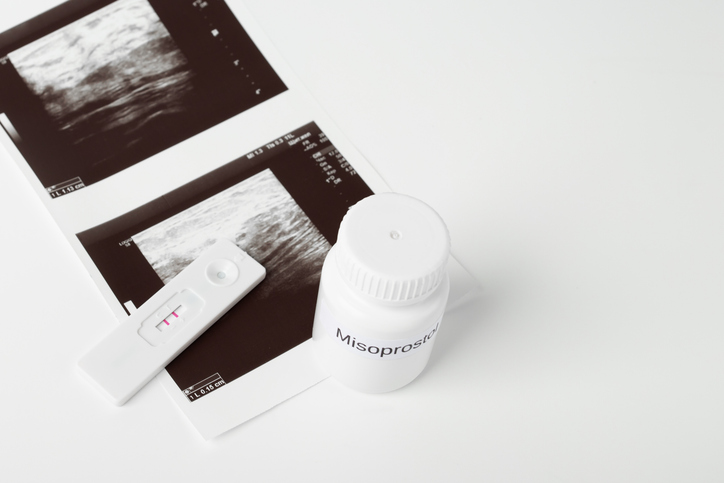
Meet the New Abortion Giant: This week, LifeNews republished an article by Steven Mosher and the head of PRI’s Latin America office, Carlos Polo, examining the global reach of DKT International, which has become the world’s largest abortion provider. Citing DKT’s 2025 figures, the article notes the organization supplied 6.5 million mifepristone-misoprostol combipacks, 31.1 million misoprostol tablets, and 275,000 manual vacuum aspirators. Mr. Mosher and Carlos Polo contend that DKT has pioneered a new abortion model built around telemedicine, social media, mail-order abortion drugs, and international distribution networks.
Deepening Depopulation
South Korea’s Birthrate Rebounds: South Korea’s fertility rate has risen from 0.72 children per woman in 2023 to 0.99 as of January 2026, offering cautious hope amid a deep demographic crisis. Over the past 20 years, the country has spent more than 360 trillion won (about $360 billion) on pro-natalist policies, including cash incentives, housing benefits, and matchmaking programs. Despite the recent uptick, South Korea’s population is still projected to shrink by roughly one-third by the early 2070s.
Have We Undercounted Humanity?: A new study from researchers at Finland’s Aalto University suggests the world’s population may be significantly larger than current estimates indicate. By comparing population data from 300 rural dam projects across 35 countries with widely used global datasets, researchers found rural populations may have been underestimated by 53% to 84% between 1975 and 2010. While some experts remain skeptical of the findings, the study raises questions about the accuracy of population data used to guide policy and resource allocation worldwide.
“Population control enthusiasts have been exaggerating the number of people on the planet for a long time,” says Mr. Mosher. “And now we have a Finnish ‘scientist’ saying that there are another billion or two humans hiding in rural areas that previous censuses have missed. How does he know this? Because when we build dams, more people apply for government relocation payments than expected. Of course, since when is a government program not rife with fraud? This particular scientist would have more luck finding Sasquatch than finding his postulated previously uncounted billion.”
The Vanishing American Father: A new Institute for Family Studies report warns of the rise of the “Vanishing American Father,” as fewer men are becoming fathers at all. The share of men ages 25–45 who are fathers fell from two-thirds in 1980 to 53% in 2024, while the number of childless men in that age group more than doubled from 10 million to 23 million. The report found fatherhood rates were significantly higher among conservative and religious men, and linked fatherhood to greater happiness, and purpose.
“With the U.S. educational establishment doing everything in its power to turn men into soy boys, this study comes as no surprise,” says Mr. Mosher. “Positive examples of fatherhood have been largely erased from television and movies and, of course, boys raised by single moms lack a male role model in the home. All and all, this is one reason for falling fertility in the U.S.”
Communist China
China Raids Underground Church: Chinese authorities raided a worship service at an underground church in Sichuan Province, detaining 31 Christians and holding two church elders for up to 15 days. Witnesses reported that 60 to 70 officials from multiple government agencies participated in the operation. The targeted congregation, Early Rain Covenant Church, has faced repeated persecution since 2018, when its pastor, Wang Yi, and more than 100 church members were detained. The raid highlights China’s continuing crackdown on independent Christian churches.
Science Gone Mad
New Concerns Over Gene Editing: A new experiment involving gene editing in human embryos has sparked warnings about the creation of designer babies and the growing push to engineer future generations. Researchers used a technique known as “base editing” to alter two genes in early-stage embryos, despite ongoing safety concerns. The study could “open the floodgates” to embryo enhancement and modern eugenics. The research also produced embryos with genetically different cells, a phenomenon known as mosaicism that may pose serious health risks.
Pro-Life Around the World
Australia Debates Sex-Selective Abortions: Thousands of pro-life advocates rallied outside New South Wales Parliament in support of legislation that would ban sex-selective abortions. The bill would help prevent the targeting of unborn baby girls and reinforce the principle of gender equality. The debate follows a 2025 study suggesting some migrant communities in Australia show unusually high male-to-female birth ratios.
Born-Alive Protection Bill Introduced: A new bill introduced in the House of Lords would require that babies born alive after an attempted abortion receive appropriate medical treatment and legal protection. The proposal comes amid growing concerns about late-term abortions and follows reports that babies have survived abortion procedures in other countries. In Victoria, Australia, 33 of 310 abortions performed after 20 weeks resulted in live births, while Queensland recorded 204 babies born alive following abortions between 2005 and 2015. The bill has now received its First Reading.
Ireland Targets Abortion Safeguard: Ireland’s Sinn Féin party has introduced legislation to eliminate the mandatory three-day waiting period before an abortion can be performed in early pregnancy. The party argues the requirement creates unnecessary obstacles, while pro-life advocates view the waiting period as an important safeguard that gives women a chance to reflect on the gravity of her decision. The proposal follows the defeat of a broader abortion bill last month, which was rejected in the Irish parliament by a vote of 85 to 30.
Pro-Life on the Home Front
Abortion Drug Risks Underreported: A new peer-reviewed study from the Charlotte Lozier Institute found significant gaps in informed consent for women undergoing chemical abortions. Researchers analyzed 179 narratives from online media and surveyed 362 women who had taken abortion drugs within the past five years. 30% of women reported experiencing more pain and bleeding than expected, while many sought information online about abortion side effects and emotional distress. The study concluded that women often lacked adequate information about the risks and emotional impact of abortion drugs.
“The abortion pill is billed by the abortion movement as a painless way of becoming un-pregnant,” says Mr. Mosher. “It is anything but. It is not enough to put a warning label on these pills. Until they can be banned entirely, they should only be available under a doctor’s supervision.”
Wyoming Strikes Three Pro-Life Laws: A Wyoming judge has struck down three pro-life laws enacted in 2025. These included requirements for abortion clinics to be licensed as surgical centers, a mandatory ultrasound, and 48-hour waiting period before an abortion, as well as stricter limits on abortion drugs. The ruling follows a Wyoming Supreme Court decision earlier this year that removed two statewide abortion bans. Pro-life leaders criticized the decision and vowed to continue efforts to protect unborn children through legislation and constitutional reform.
Supreme Court Rejects Pro-Life Case: The U.S. Supreme Court declined to hear a case involving a pro-life student club whose high school was barred from displaying posters that included the message “Defund Planned Parenthood.” The decision leaves in place lower court rulings that sided with the Indiana school, which argued that the posters could be viewed as carrying the school’s endorsement. Justice Samuel Alito dissented, warning that the Court should clarify protections for student free speech in public schools.
Good News
Rome Marches for Life: Thousands of pro-life advocates gathered in Rome for the annual “Scegliamo la Vita” (“Let’s Choose Life”) March, calling for greater protection of human life and opposing abortion, euthanasia, and assisted suicide. Marchers urged lawmakers to repeal Italy’s abortion law, which permits abortion through 12 weeks of pregnancy and, in some cases, beyond. The event promoted a culture of life and respect for the dignity of every human person from conception to natural death.
Quote of the Week
“The fundamental human right, the presupposition of every other right, is the right to life itself. This is true of life from the moment of conception until its natural end. Abortion, consequently, cannot be a human right—it is the very opposite.”
~ Pope Benedict XVI