

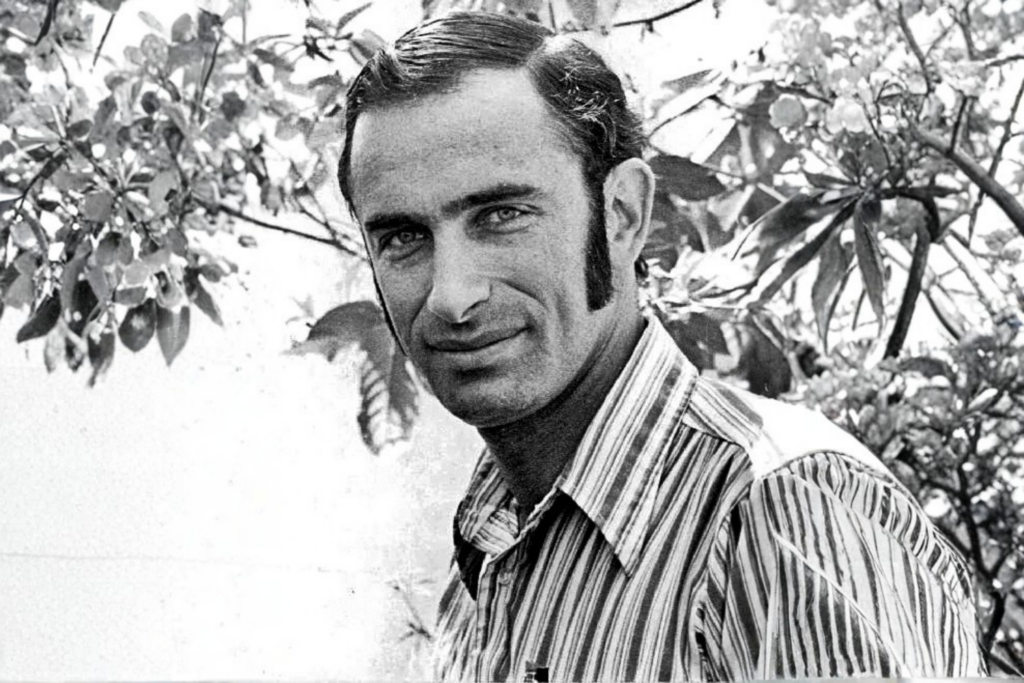
In 1968 a young Stanford University biologist by the name of Paul Ehrlich, published his very first book. He called it The Population Bomb. And, according to him, this “bomb” in the form of too many babies had already gone off.
There was nothing that humanity could do now but wait for the inevitable human die-back.
His very first sentence foretold this coming doom. “The battle to feed all of humanity is over,” he wrote. “In the 1970s the world will undergo famines—hundreds of millions of people will starve to death in spite of any crash programs embarked upon now.”
The situation was simply hopeless, he opined. “Too many people” were, in his words, chasing “too little food.”
Ehrlich laid out a series of “scenarios” for this coming population collapse, each one more dire than the last.
The most optimistic of his “scenarios” involved the creation of a world government (!) that would immediately impose a harsh regimen of population control and resource conservation around the world. The goal would be to reduce the number of people on the planet by three-quarters—from the then 6 billion down to 1.5 billion of so.
Even if such a radical program were adopted, Ehrlich gloomily informed his readers, about a fifth of the world’s population would still starve to death in the immediate future. (The book left readers with the impression that this die-back might not be such a bad thing.)
Ehrlich was a master of the panic-driven writing style, and the book had an explosive impact. Heavily promoted within the U.S. government and by the Sierra Club, it sold four million copies and became a must-read on college campuses everywhere.
Looking back now, it seems strange that the book had such a massive impact. When The Population Bomb appeared there was no hint of massive famine on the horizon. The days of Indian food shortages were past, and we wouldn’t learn about China’s man-made famine of the early sixties until a decade later.
Not only that, but the Green Revolution was starting to pay off in increased crop yields.
That’s why experts like Dr. Karl Brandt, the Director of the Stanford Food Research Institute, rebuked Ehrlich, saying that “Many nations need more people, not less, to cultivate food products and build a sound agricultural economy . . . every country that makes the effort can produce all the food it needs.”
But it wasn’t his forecast of a massive human die-off that catapulted Ehrlich into the front rank of environmental doomsayers.
Rather it was his startling claim that our reckless breeding had jeopardized earth’s ability to support life. All life, not just human life, down to the lowliest protozoa, was in danger.
According to Ehrlich, the planet itself was literally dying. That is to say, not only were we Children of Earth killing ourselves, we were going to take “Mother Earth” with us to the grave as well.
Scary stories sell, and Ehrlich was an excellent self-promoter. He became an instant celebrity, becoming as much of a fixture on the “Tonight Show” as Johnny Carson’s sidekick Ed McMahan. He commanded hefty lecture fees wherever he went–and he went everywhere, always drawing a crowd.
People found it titillating to hear his apocalyptic predictions about the end of the world. Ehrlich often likened the earth to an overloaded spaceship or a sinking lifeboat, suggesting it was time to start throwing people overboard. He captured the popular imagination by suggesting that it would soon be “standing room only” on the earth’s surface.
There was only one solution to the problem of overpopulation, he would tell his listeners: “You must join the environmental movement, stop having children, and save the planet.”
Over the decades, he managed to convince many Americans that the environmentally responsible thing to do was to have few or no children. This is one reason why present-day Progressives are having far fewer children than conservatives.
Ehrlich’s fantasies of famine and ecosystem collapse never materialized, of course.
It has long been evident that humanity’s long-term problem is not too many people, but too few. Even the New York Times, that bastion of liberal insanity, was forced to admit in 2000 that “overpopulation” was one of the myths of the 20th century.
Paul Ehrlich himself, however, never wavered in his belief that humanity constituted a kind of plague on the planet. To the very end of this day, he never regretted having only one child and then having himself vasectomized to ensure he wouldn’t have a second.
Many others, however, belatedly realizing that they had been deceived by Ehrlich’s and others proclamations of doom, have come to regret contracepting the children they would have had out of existence.
When giving talks on “The Myth of Overpopulation,” I have had a number of couples and individuals come up to me and admit that they fell for the myth. “We decided not to have children, or only one,” they tell me. “We now wish we would have had more. Now we are old, lonely, and have no grandchildren.”