
“One controversial proposed economic adaptation comes from Phillip Longman, author of The Empty Cradle: How Falling Birthrates Threaten World Prosperity and What To Do About It. Joseph D’Agostino, vice president of the Population Research Institute, describes Longman’s proposal as suggesting that the more children you have, the less you and your employer pay out in Social Security taxes. At retirement, benefits would be computed as though the worker had paid maximum taxes.”
Michael Arnold Glueck, M.D., and Robert J. Cihak. M.D., “Would more kids save Social Security?,” Orange County Register, 20 September 2005
“Dr. Ligaya Acosta, former information officer of the Department of Health (DOH)…quoted Steven Mosher, president of the Population Research Institute based in the U.S., who said in his article ‘Protecting the Culture of Life in the Philippines’ published in Lay Witness (January-February 2004), ‘(t)he Philippines was one of a dozen countries named in a secret 1974 U.S. National Security Council Memorandum (NSSM 200) which made population control a weapon in the Cold War.’”
Kathy Villalon Cinco, “Church told to be more aggressive in drive v. birth control,” Sun Star Iloilo, 15 April 2005, http://www.sunstar.com.ph/static/ilo/2005/04/15/news/church.told.to.be.more.aggressive.in.drive.v..birth.control.html
“In India in 1964, there were 500 million people and a great famine. Now in 2005, with more than one billion people, India is self-sufficient for food.
“In 1922, Italy had a population of 27 million people and was one of the nations with a great migration out of the country for lack of food and jobs. In 2005 with a population of 57 million, it is in need of more population in order to keep up with the pace of its development. The same applies to the whole of Western Europe.
“China in 1950, at the time of the Communist revolution, had a population of more or less 600 million people and was heavily underdeveloped. Now with a population of 1.3 billion, China is a superpower.
“(Population Research Institute Review, January–February 2005, page 6)”
“Basic Facts,” International Right to Life Federation, Inc. Newsletter; page 4, May-June 2005
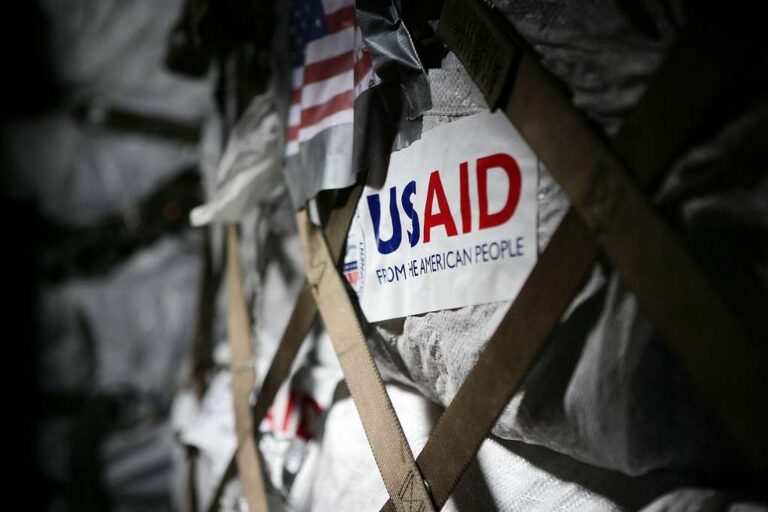
“The Population Research Institute (PRI), an organization dedicated to dispelling the myth of over-population and to protecting individuals and countries from being targeted, wrote in a release last year, ‘the funding of this [USAID-funded October 2003] conference, and of organizations that are pushing for abortion on demand in Peru, is a blatant violation of U.S. law.’ Said PRI’s Steven Mosher, the speakers at the conference did not try to hide their intention regarding Peru’s laws.”
“USAID ‘Biggest Obstacle’ to Pro-Life Work of Peruvian Lawmakers, Author Says,” LifeSiteNews.com, 2 August 2005, http://www.lifesite.net/ldn/2005/aug/05080203.html
“The U.N. believes population control simply means fewer poor people. That requires convincing or coercing people in certain countries.
“Joseph D’Agostino, vice president for communications at the Population Research Institute, said coercion is often the method chosen.
“‘When you go to government officials in these countries and you tell them to reduce the number of children being born, they tend to employ whatever it takes,’ he said.
“[Jeffrey] Sachs has said he ‘aggressively promotes’ China’s family planning methods. The statement horrifies D’ Agostino, since China’s policy includes an abortion-enforced one-child policy.
“‘The program has led to all kinds of unforeseen side effects,’ he said. ‘There are now tens of millions of extra young men, so to speak, because their brides have been murdered in the womb or shortly after birth.’”
Kim Trobee, “U.N. Official Maintains Key to Ending Poverty is Abortion,” Family News in Focus, 13 July 2005, http://www.family.org/cforum/fnif/news/a0037176.cfm