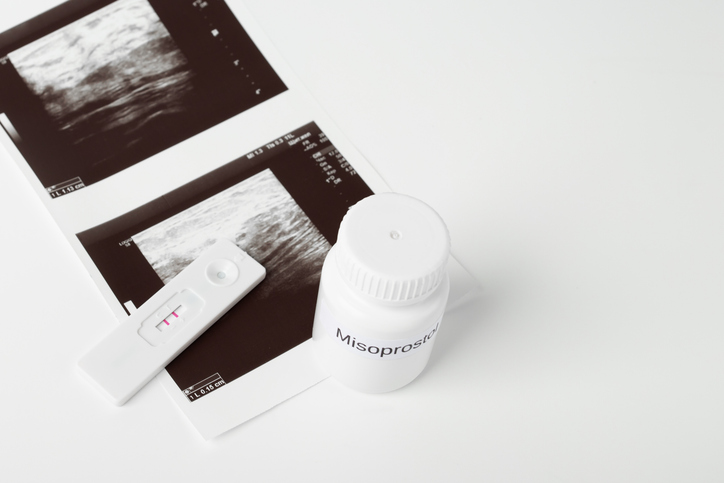

UN Tells Poland: Legalize Abortion
The United Nations Human Rights Committee (UNHRC) has decided Poland needs abortion — despite the fact that mostly Catholic Poland doesn’t want it legalized. The UNHRC reported Poland has not complied with the International Covenant on Civil and Political Rights (ICCPR), and demanded they “liberalize its legislation and practice on abortion.”
In addition to abortion liberalization, UNHRC instructed Poland on contraception and sex education: “The State Party should assure the availability of contraceptives and free access to family planning services and methods. The Ministry of Education should ensure that schools include accurate and objective sexual education in their curricula.”
The U.N. committee also believes it can force the Poles to accept homosexuality: “The Committee is concerned that the right of sexual minorities not to be discriminated against is not fully recognized. and that discriminatory acts and attitudes against persons on the ground of sexual orientation are not adequately investigated and punished,” demanding that “the State Party should provide appropriate training to law enforcement and judicial officials in order to sensitize them to the rights of sexual minorities. Discrimination on the ground of sexual orientation should be specifically prohibited in Polish law.”
Pray that Polish pro-lifers can stave off these new anti-life forces.
“U.N. Demands Poland Overturn Anti-Abortion Laws,” LifeSite News Special Report, 9 November 2004, www.lifesite.net/ldn/2004/nov/041109a.html
Japan’s Birthrate
Japan’s government, foreseeing economic and social disaster, is expected to adopt the “Angel Plan,” which includes increased paid leave as concern grows over Japan’s low birthrate.
This year, the average number of children home to a Japanese woman during her lifetime fell to 1.29, down from 1.32 in 2002 and 1.50 in 1994, well below the level needed to replenish the population.
Health ministry figures show that 22.8 million of Japan’s 127.1 million people are aged 65 or older. If that trend is not reversed, the country will lose 20% of its current population by 2050.
The new five-year Angel Plan is an expanded version of a similar past scheme. This version wants companies to provide child-care leave for all staff, reduce by 10% the number of working hours for those who put in 60 hours or more a week, and insist workers take at least 55% of the paid leave they are entitled to every year.
“More holidays means more babies, government officials believe,” AsiaNews.it, 22 December 2004, www.asianews.it/view.php?1=en&art=2165
Abortion in Russia
In this land of political turmoil, there is a snag in the attempt of babies to live as well, Abortions in Russia now outnumber live births about 2 to 1. Women take for granted that in their lives they will have many abortions. As one Russian woman said, “I’ve had 30 abortions already, what’s the big deal?” Russian women have been aborting legally since 1921, Russia being one of the first countries to legalize the practice.
It is believed that Russia has the highest abortion rate in the world. According to a compilation from the Demographic Yearbook of the European Council and a Demographic Yearbook by the United Nations, Russia is the only nation in the world where abortions consistently outnumbered live births by a ratio of about 2 to 1. In 1970, there were 1.9 million births and 4.8 million abortions. Today, the number has decreased slightly due to access to contraceptives in the early 1990s: for every live birth there is about 1.5 abortions. At its highest rate in 1983, there were only about 16 abortions for every 19 live births.
Anna Arutunyan, “Abortion in Russia: No Big Deal,” The Moscow News, 29 November 2004.
Canada Anti-Lifers
While PRI has been successful in decreasing the amount U.S. taxpayers are forced to give to the United Nations Population Fund (UNFPA) — due to its complicity in promoting abortion in China — Canadian taxpayers will see an increase in the amount of funding their government will give to the UNFPA.
International Cooperation Minister i Aileen Carroll recently announced that Canada will increase her annual contribution to the UNFPA by almost 40%, from $13.1 million to $67.4 million over four years — about $16.9 million each year. Most of the money will go to financing programs that were seriously curtailed by the U.S. boycott of UNFPA over the past three years while about $9 million will be specifically directed to a fund for birth-control supplies such as condoms.
Susan Delacourt, “Canada boosts funding for U.N. program,” Toronto Star, 29 November 2004