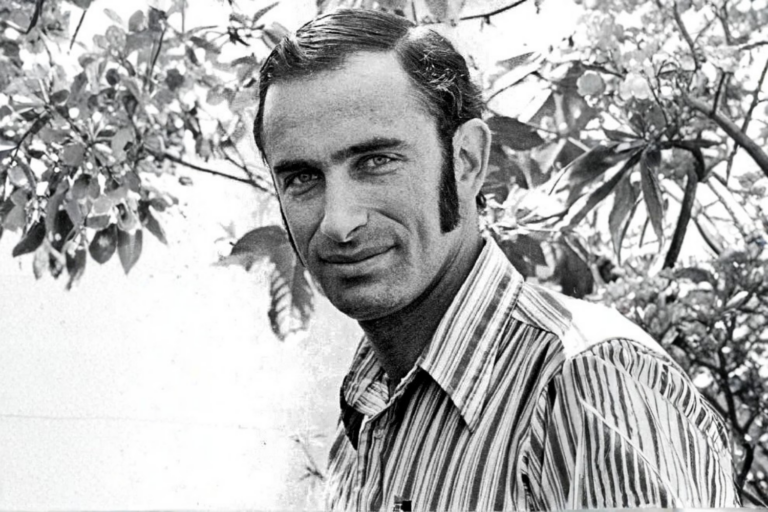

Dr. Alban d’Entremont is Dean of Studies and Professor of Population Geography at the School of Liberal Arts, University of Navarro, Spain.
A large amount of information has been published recently in the international press on the supposed relationships between population growth and its negative effects on the environment, especially in those Third World countries which have both high population growth rates and a delicate ecological balance. This information is largely inspired by the recent Report put out by the Washington-based organization, the Population Crisis Committee, in which it is stated that the greatest obstacle standing in the way of development and a clean environment is the “unprecedented demographic growth of the Third World which places an insurmountable burden on raw materials, energy resources, and the overall ‘carrying capacity’ of the planet.”1
As a result of this line of reasoning, this Committee and other related organizations propose voluntary global population planning as the “cheapest and fastest solution” to the environmental problems which mankind will have to face in the Twenty- first Century.2 Consequently, a new call has been made on the United States Government to renew the financial support which prior to the Reagan Administration it provided to organizations such as the United Nations Population Fund and the International Planned Parenthood Federation, which for many years have been involved in the promotion of antinatalist and associated practices in many parts of the globe.3
A Common Sense Approach
Apart from the very doubtful scientific validity of many of the statements and statistical figures used in the mentioned Report,4 which all point to strict correlations of cause and effect between population growth and detrimental consequences on the environment, it would seem clear, even from the point of view of plain common sense and sheet good will, that a more realistic, ethical and objective approach to the problems of development and the environment has to be sought from real solutions that safeguard the dignity of the human person and human life itself, above any other consideration.
In this line of common-sense and honest reasoning, it has to be pointed out that the complexity of the processes involved in social and economic change in the global evolution of societies makes it very difficult to apply simplistic unilateral and universal criteria to explain the dysfunctions which arise in the present-day world, or to propose global “solutions” which are inspired in dubious ideologies and are not based on the real nature of things.5
A Restatement of Failed Ideologies
Above all, to unilaterally place the blame for almost all the problems of the world — including environmental deficiencies — on population growth, does not denote real human progress at all. Rather, it is regression based on population theories put forth several decades ago, with hidden implications, whose scientific validity is more than questioned today in demographic circles.6
The theory of “overpopulation” which inspires a pessimistic and catastrophic view of the future such as the one depicted in the mentioned Report and other similar literature,7 discriminately places the blame for poverty and widespread malaise on the “uncontrolled reproductive habits of the inferior classes,” as did Malthus, who is the not-so-indirect progenitor of this theory.8 Only that today the “inferior classes” are the men and women of the Third World considered globally, whose lives — according to this view — have to be placed under the control of militant planning imported from the rich nations, in order to avoid the catastrophic consequences of mass starvation, overcrowding, the depletion of natural resources and environmental disasters.
The environmental variable is simply a restatement of overpopulation theory, which was introduced in this global approach more recently, now that all the predictions put forth twenty to thirty years ago on the future catastrophic effects of population growth on social and economic development and well-being have been proven to be completely false.9
How population growth affects development and the environment is a complex matter that cannot be unraveled by means of simple and ambiguous far-reaching generalizations. It would seem that there are no inherent universal laws linking demo- graphic growth and economic and environmental development, but rather that the latter will go one way or another depending on other factors and variables which are not demographic, nor even economic or ecological. Rather, the root causes stem from a deeper anthropological substratum and are firmly entrenched in culture, traditions, mentalities and personal and ethical considerations.10
A Realistic View
Many are those who — in opposition to the population planners and upon the basis of statistically supported data from many parts of the world — categorically deny a pessimistic view justifying indiscriminate population control, whose “voluntary” nature is also questioned.11 This opposing view, apart from being honest, is much more realistic, given that recent statistics indicate that in a number of Third World countries — especially in Latin America and Asia12 — in such significant areas such as life expectancy, infant mortality, health, food production, housing, education and so on, great positive strides have been made in the last ten to twenty years.13
There are many present-day paradigmatic examples of this fact, which clearly contradict the pessimistic view of the neo-Malthusian “Limits to Growth” or “Zero Sum” ideology.14
A Cruel Paradox
In spite of this, the pessimistic view has become a conventional view of the world which is being fostered by the mass media,15 and which largely overlooks the fact, among other things, that population growth rates have been sharply declining in recent years in many Third World countries (as a consequence, more than anything else, of the successful implementation of the “anti-life mentality” and its practical applications imported from the Western World), or that global living conditions in the Third World — and in the world on the whole — have not become worse, but rather have greatly improved in the last decades.16
To place the blame on population growth for environmental disasters not only shows a lack of scientific rigor, or even of common sense, but also it is not even an ecological approach, but simply a radical and false offshoot of overpopulation theory. It is ideological ecologism, a new form of pantheism17 which only with difficulty can disguise covert political, ideological and commercial vested interests. It is also blatant1y self-contradictory, since it manifestly gives primacy to the physical and animal world over and above the human world18 : the unilateral planning and sacrifice of human lives through abortion and other associated practices, with the aim of protecting other forms of natural life, represents yet another paradox of the present age — perhaps the most cruel and hypocritical of all.
A Courageous Stance
The former U.S. Government Administration was aware of the internal contradictions and of the clear totalitarian tendencies of the anti-population movement, which operates on the marginal fringes of ethical considerations and outright disregards the values and legitimate aspirations of millions of men and women in the Third World. It also recognized that a large part of the problems bearing on food, housing, development and the environment cannot be blamed on population growth, but rather that they are caused by human failures, institutional errors, the lack of international solidarity, unjust political systems, culpable negligence, ignorance and vested interests of the most varied nature.
Adopting a courageous stance, the former U.S. Administration broke with previous Government policy19 on population matters and to a large degree opted for the defense of life by withdrawing its funding of population programs based on abortion and other related proposals. The present U.S. Government, with the public support of both President Bush and Vice President Quayle,20 is continuing this courageous and encouraging policy.
The Unqualified Defense of People
Any individual or organization whose sole interest is that of upholding and defending the dignity of human life in all its manifestations, especially as entrenched in the values of life itself and in the family, will agree with this policy. It is logical and consistent that true ecologism can only come by way of the unqualified defense of people who by means of their efforts and competence, their hopes and illusions, can deploy their imagination and their will in the pursuit of their own legitimate interests which — inevitably — are the interests of all men and women on earth.21
To support human life and the human person is the best defense of the environment, which is made up not only of vegetable and animal life, but rather is an integrated system in which the primacy of human beings must be valiantly affirmed. This is the deepest and most authentic form of ecology.
1 Navarra Hoy, August 13, 1990, page 30. In Spain, where the author is based, the Report was widely divulged in the press through EFE, the official Government news agency. Spain, as is known, has a Socialist Government since 1982.
2 According to the Population Crisis Committee, the cost of massive Family Planning in the world today — 5 billion dollars annually according to the quoted source — is “half the amount that would be needed ten years from now.” Ibid.
3 According to Sharon Camp, Vice President of the Population Crisis Committee, the drastic reduction of birthrates is “technically feasible,” but what is presently lacking is “political will.” Ibid.
4 The Report claims, among other things, that “according to experts” one million people died of starvation in Africa in 1984 and 1985, that the world’s population will double and “perhaps even triple” by the next Century, that the unprecedented population growth of the Third World poses a “real threat” regarding pollution, the Ozone Belt and the “Green-house Effect,” and is to be blamed for deforestation processes, the depletion of water resources and the destruction of pastures and coral reefs.
5 Alban d’Entremont, “Cambio demografico y cambio socioeconomico en el mundo: el dilema persistente,” Situacion, 1988/3, pp. 26-48.
6 See the Section entitled “Population Theory and Policy: Poverty, Pollution, Resources and Development,” in Scott W. Menard and Elizabeth W. Moen, eds., Perspectives on Population, Oxford University Press, New York and Oxford, 1987, pp. 87-128.
7 The Population Crisis Committee Report adds no tangibly new items or approaches to the current debate, but rather uses the ecological alarm as a catch-word to draw attention to “limits-to-growth” stances that are prevalent in pro-abortion and other related works that have gained great popularity — even in Europe — in the last few years, in spite of their pseudo-scientific content. In this line, we could mention, among many others, Paul R. Ehrlich, The Population Bomb, Sierra Club, Ballantine Books, New York, 1968; D.H. Meadows et al., Limits to Growth, Universe Books, New York, 1972; and Lester Brown, In the Human Interest, W.W. Norton and Company, New York, 1974. Proof that the old positions are being maintained unmoved by these same advocates of population control, against overwhelming evidence in favor of the contrary stance, is the fact that they are still publishing widely divulged books today with practically the same arguments. In this line, among others, Paul and Anne Ehrlich, The Population Explosion, Simon and Schuster, New York, 1990; and Lester Brown et al., State of the World: A Worldwatch Institute Report on Progress Towards a Sustainable Society, W.W. Norton and Company, New York and London 1987. A notable precursor of this type of general alarmist literature was William Vogt’s Road to Survival, 1948, as was Rachel Carson’s celebrated Silent Spring, 1962, with respect to the environmental implications per se.
8 Alfonso Vegara and Alban d’Entremont, Introduccion al Analisis Demografico, Taller de ideas. Pamplona, 1988, p. 26 and following, offer a critical view of Malthusianism and Neo-Malthusianism. Malthus’ own famous “essay” is reproduced in edited form in Menard and Moen, op. cit., pp. 97-103.
9 Jullan L. Simon, Population Matters, People, Resources, Environment and Immigration, Transaction Publishers, New Brunswick (USA) and London (UK), 1990. A comprehensive review of the ideas contained in this recent book is offered in Spanish by Alban d’Entremont, “La poblacion, una vez mas,” Nuestro Tempo, No. 439, January 1991. See also Julian L. Simon, “World Population: An Anti-Doomsday view,” in Menard and Moen, op. cit., pp. 123-128.
10 d’Entremont, “Cambio Demografico…,” op. cit., p. 42; and Nick Eberstadt, “Population and Economic Growth,” The Wilson Quarterly, Vol. X, No. 5, 1986, pp. 95-127.
11 Among many others, Ben Wattenberg, The Good News is the Bad News is Wrong, Simon and Schuster, New York, 1984; Julian L. Simon, The Ultimate Resource, Princeton University Press, Princeton, New Jersey. 1981; Julian L. Simon and Herman Kahn, eds., The Resourceful Earth, Basil Blackwell, New York, 1984; and Jacqueline Kasun, The War on Population, Green Hill Publishers, California, 1988. In Europe, the works of Alfred Sauvy, Colin Clark, Manuel Ferrer and Jean-Claude Chesnais, for example, are also well known.
12 Jean-Claude Chesnais, La Revancha del Tercer Mundo, Editorial Planeta, Madrid, 2988, p. 128. Africa, however, is not developing at the same rate of growth and is lagging far behind, although once more, it would be unfair to lay the blame on population growth. Here — as recent events have shown — much of the rampant strife is due to corrupt political regimes, tribal warfare, outmoded economic structures and cultural deficiencies – and a notable lack of international solidarity. See Daniel Bell, “The Future as Context,” Address to the Fourth International Meeting of the Permanent Seminar “Enterprise and Humanism,” Madrid, November 1990.
13 Chesnais, op. cit.; and Julian L. Simon, The Resourceful Earth, op. cit. A more technical view is offered in R. Summers and A. Heston, “Improved International Comparisons of Real Product and its Composition. 1950-1980,” Review of Income and Wealth, June 1984.
14 Ibid. See also Alban d’Entremont, “Una cura de realismo para catastrotistas,” Nuestro Tempo, No. 369, March 1985, pp. 6-15.
15 Population Matters, op. cit., pp. 462-464.
16 Ibid., and Chesnals, op. cit.
17 Alejandro Llano, La Nueva Sensibildad, Espasa-Calpe, Madrid, 2988. Forthcoming in English as The New Sensibility, University of Navarra Publications Service, Pamplona, 1991.
18 “Save Crocodiles, Let People Starve,” Population Research Institute Review, vol. 1, no. 1, January/February 1991, p. 12.
19 Alban d’Entremont, “Conferencia de Poblacion en Mexico: La Guerra de los Mundos,” Nuestro Tiempo, No. 363, September 1984, pp. 8-17.
20 Escoge la Vida, Human Life International, No. 30. November/December 1990, p. 5.
21 The Ultimate Resource, op. cit., and Theodore W. Shultz, Investing in People: The Economics of Population Duality, University of California Press, Berkeley, Los Angeles and London, 1981.