PRI Insider

PRI Insider (Volume 4, Issue 20) May 24

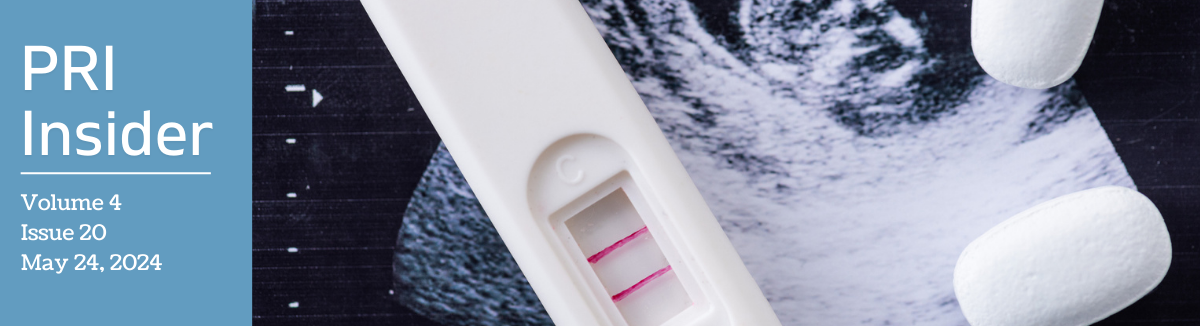
In This Issue: Planned Parenthood now offers the abortion pills through its app in four states. The abortion giant is pushing abortion access through all available avenues. Planned Parenthood’s “Direct” app also offers “birth control, UTI treatments, and the emergency contraception Ella delivered to their door without seeing a doctor.” Women in Hawaii, Maryland, Washington, and now Illinois can receive the deadly combination of mifepristone and misoprostol without an in-person visit.

Read More »

PRI Insider (Volume 4, Issue 19) May 17

In This Issue: Last week, South Korean President Yoon Suk-yeol announced that he would be creating a “Ministry of Fertility” to counter the country’s low fertility rate. South Korea has the lowest fertility rate in the world at 0.72, which President Yoon called “a national emergency.”

Read More »

PRI Insider (Volume 4, Issue 18) May 10

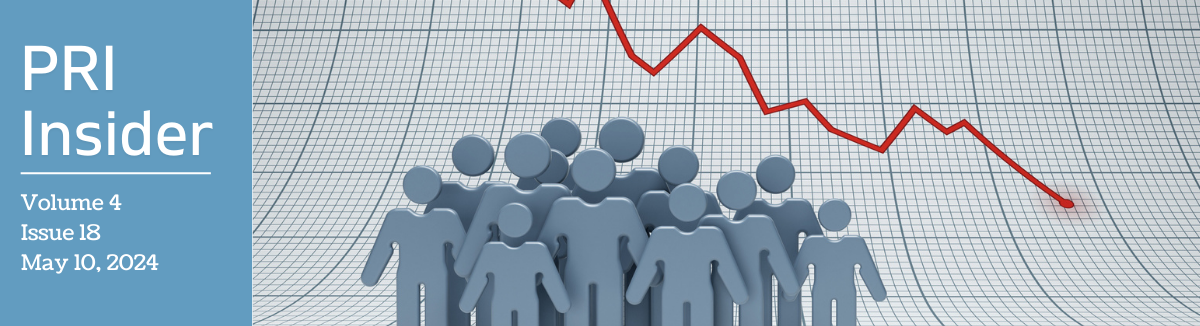
In This Issue: Countries brought their grievances over low fertility rates to this year’s UN Commission on Population and Development. Representatives voiced concerns over the potential consequences of falling fertility rates, including anemic economic growth, labor shortages, fiscal insolvency, and other social problems. Yet, even as representatives from countries in the Middle East and Europe shared these concerns, representatives of Western countries and UN agencies continued to push for lowering populations.

Read More »

PRI Insider (Volume 4, Issue 17) May 3

In This Issue: The Center for Disease Control and Prevention has released the provisional birth rate data for 2023 and the U.S. was once again in decline. The statistics revealed that a little under 3.6 million babies were born last year, which is 76,000 fewer than the year before. It is also the lowest one-year tally since 1979.

Read More »

PRI Insider (Volume 4, Issue 17) April 26

In This Issue: In March, Iowa tabled legislation that would have made it a felony to “cause the death” of an “unborn person.” Iowa is trying to avoid introducing personhood legislation, which recognizes the unborn child as having legal rights and protections. Alabama’s recent Supreme Court decision regarding IVF put personhood legislation in the spotlight for all the states.

Read More »

PRI Insider (Volume 4, Issue 15) April 19th

In This Issue: Planned Parenthood’s 2022-2023 annual report revealed that the organization provided a total of 392,715 abortions. If the CDC factored child deaths caused by abortion into their “Leading Causes of Death” data, that would make Planned Parenthood-performed abortions the fourth leading cause of death, behind heart disease, cancer, and Covid-19.

Read More »

PRI Insider (Volume 4, Issue 14) April 12

In This Issue: New data regarding American fertility may hold a silver lining to the “birth dearth” that the nation is experiencing. As we have highlighted previously, the U.S. fertility rate is below replacement and, in general, continues to trend downward. However, data from 2022 suggests that while Americans are having fewer babies, the babies that are being born are more likely to be born to married parents.

Read More »

PRI Insider (Volume 4, Issue 13) April 5

In This Issue: This week, the political network for values celebrated our Ibero-American office’s 20th anniversary on social media, stating the following:

“Congratulations to the Population Research Institute for their 20 years of service in Ibero-America. We join them in the celebration and look forward to continuing to work together to defend life, family, and liberties.”

Read More »

PRI Insider (Volume 4, Issue 12) March 29

In This Issue: On March 26th, the Supreme Court began hearing oral arguments for the case that will decide the future of the abortion pill. Since the pandemic, the FDA has loosened restrictions on the abortion drugs mifepristone and misoprostol. According to one expert, “The telehealth policy, which the FDA temporarily implemented during the COVID-19 pandemic before making it permanent, is really ‘what opened the gate’ to the drug’s broader use.” This has directly contributed to the uptick in abortions. Last year, the total number of abortions in the U.S. surpassed 1 million for the first time in over a decade.

Read More »

PRI Insider (Volume 4, Issue 11) March 22

In This Issue: In this argument for her audience to have more children, Leah Libresco Sargeant breaks down why increasing your family size is a good thing. The issue goes beyond economics. In Sargeant’s words, saying no to children is a no to hope, need, particularity, and something better than our plans. Her compelling speech describes how children are not just society’s future, but each individual’s connection to the future. Parents are truly lucky to be needed by their children; to love and be loved in return by their children. Children pull parents out of selfishness and give them the opportunity for personal growth. Further, children require parents to grow in magnanimity–greatness of soul. Children may challenge you and change you, but in that, they are blessings, not burdens.

Read More »

PRI Insider (Volume 4, Issue 20) May 24

In This Issue: Planned Parenthood now offers the abortion pills through its app in four states. The abortion giant is pushing abortion access through all available avenues. Planned Parenthood’s “Direct” app also offers “birth control, UTI treatments, and the emergency contraception Ella delivered to their door without seeing a doctor.” Women in Hawaii, Maryland, Washington, and now Illinois can receive the deadly combination of mifepristone and misoprostol without an in-person visit.

Read More »

PRI Insider (Volume 4, Issue 19) May 17

In This Issue: Last week, South Korean President Yoon Suk-yeol announced that he would be creating a “Ministry of Fertility” to counter the country’s low fertility rate. South Korea has the lowest fertility rate in the world at 0.72, which President Yoon called “a national emergency.”

Read More »

PRI Insider (Volume 4, Issue 18) May 10

In This Issue: Countries brought their grievances over low fertility rates to this year’s UN Commission on Population and Development. Representatives voiced concerns over the potential consequences of falling fertility rates, including anemic economic growth, labor shortages, fiscal insolvency, and other social problems. Yet, even as representatives from countries in the Middle East and Europe shared these concerns, representatives of Western countries and UN agencies continued to push for lowering populations.

Read More »

PRI Insider (Volume 4, Issue 17) May 3

In This Issue: The Center for Disease Control and Prevention has released the provisional birth rate data for 2023 and the U.S. was once again in decline. The statistics revealed that a little under 3.6 million babies were born last year, which is 76,000 fewer than the year before. It is also the lowest one-year tally since 1979.

Read More »

PRI Insider (Volume 4, Issue 17) April 26

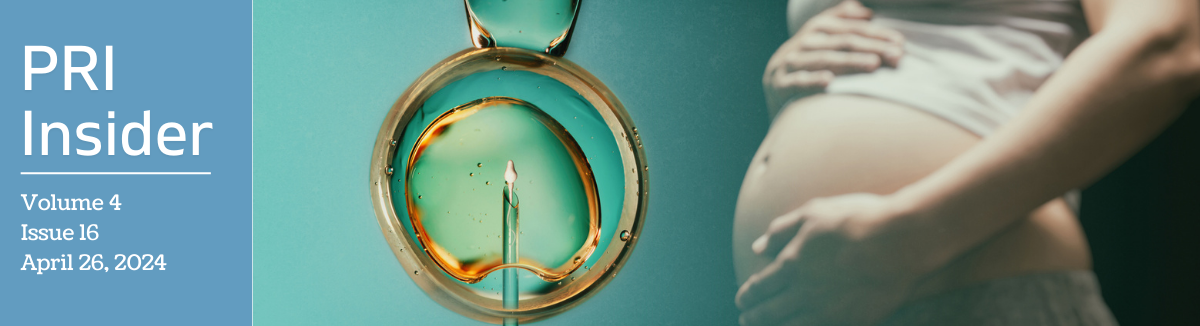
In This Issue: In March, Iowa tabled legislation that would have made it a felony to “cause the death” of an “unborn person.” Iowa is trying to avoid introducing personhood legislation, which recognizes the unborn child as having legal rights and protections. Alabama’s recent Supreme Court decision regarding IVF put personhood legislation in the spotlight for all the states.

Read More »

PRI Insider (Volume 4, Issue 15) April 19th

In This Issue: Planned Parenthood’s 2022-2023 annual report revealed that the organization provided a total of 392,715 abortions. If the CDC factored child deaths caused by abortion into their “Leading Causes of Death” data, that would make Planned Parenthood-performed abortions the fourth leading cause of death, behind heart disease, cancer, and Covid-19.

Read More »

PRI Insider (Volume 4, Issue 14) April 12

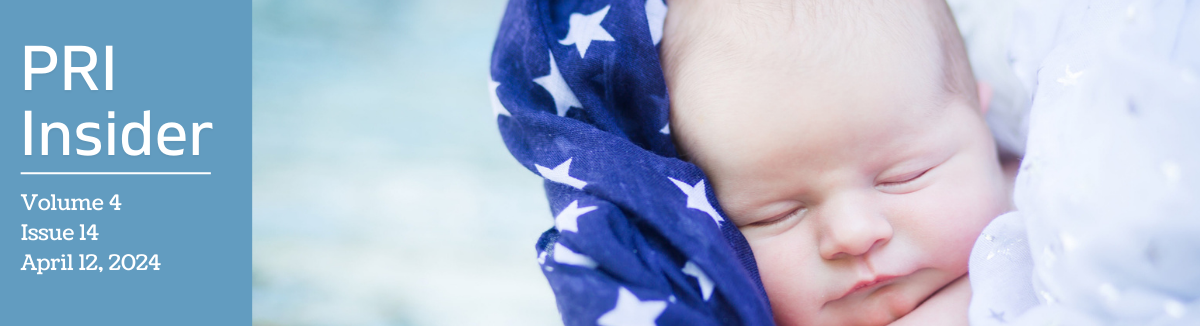
In This Issue: New data regarding American fertility may hold a silver lining to the “birth dearth” that the nation is experiencing. As we have highlighted previously, the U.S. fertility rate is below replacement and, in general, continues to trend downward. However, data from 2022 suggests that while Americans are having fewer babies, the babies that are being born are more likely to be born to married parents.

Read More »

PRI Insider (Volume 4, Issue 13) April 5

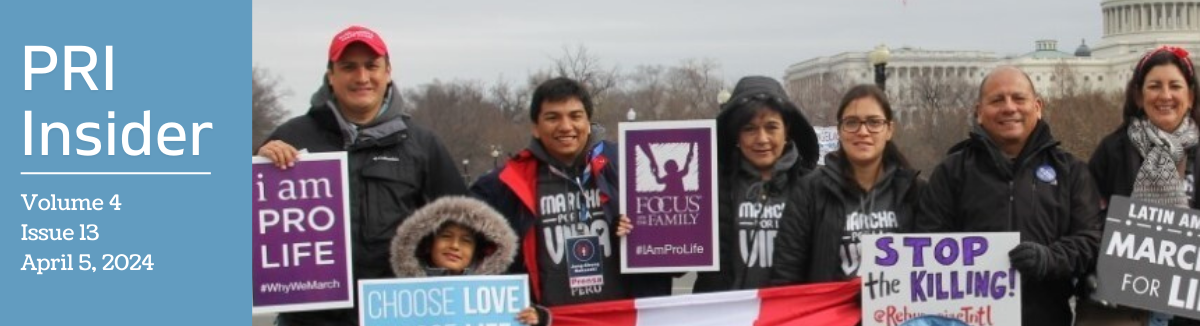
In This Issue: This week, the political network for values celebrated our Ibero-American office’s 20th anniversary on social media, stating the following:

“Congratulations to the Population Research Institute for their 20 years of service in Ibero-America. We join them in the celebration and look forward to continuing to work together to defend life, family, and liberties.”

Read More »

PRI Insider (Volume 4, Issue 12) March 29

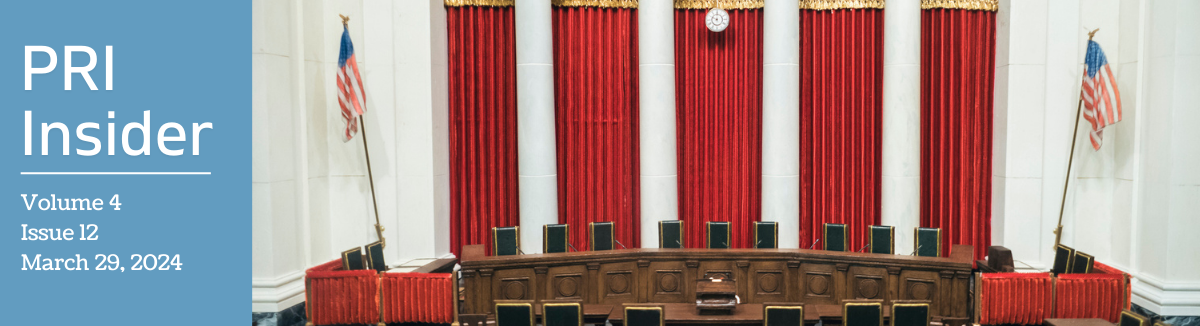
In This Issue: On March 26th, the Supreme Court began hearing oral arguments for the case that will decide the future of the abortion pill. Since the pandemic, the FDA has loosened restrictions on the abortion drugs mifepristone and misoprostol. According to one expert, “The telehealth policy, which the FDA temporarily implemented during the COVID-19 pandemic before making it permanent, is really ‘what opened the gate’ to the drug’s broader use.” This has directly contributed to the uptick in abortions. Last year, the total number of abortions in the U.S. surpassed 1 million for the first time in over a decade.

Read More »

PRI Insider (Volume 4, Issue 11) March 22

In This Issue: In this argument for her audience to have more children, Leah Libresco Sargeant breaks down why increasing your family size is a good thing. The issue goes beyond economics. In Sargeant’s words, saying no to children is a no to hope, need, particularity, and something better than our plans. Her compelling speech describes how children are not just society’s future, but each individual’s connection to the future. Parents are truly lucky to be needed by their children; to love and be loved in return by their children. Children pull parents out of selfishness and give them the opportunity for personal growth. Further, children require parents to grow in magnanimity–greatness of soul. Children may challenge you and change you, but in that, they are blessings, not burdens.

Read More »