

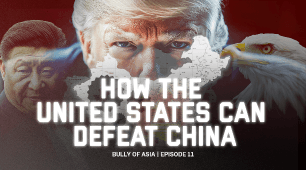
Mosher catalogs concrete evidence of China’s drive for global hegemony. CCP propaganda outlets have published detailed maps depicting nuclear strikes on American cities, while China presses aggressive territorial claims against Japan (Senkaku Islands, Okinawa), the Philippines, Taiwan, India (a deadly 2021 border clash), and even hints at claims on Mongolia and Russia’s Vladivostok, where ethnic Chinese may now outnumber Russians in the sparsely populated Far East. China’s rapid military buildup is powered by unmatched cyber espionage, which grants a “latecomer’s advantage” — allowing China to clone advanced weapons like the F-35 (into its J-31) by stealing digital plans rather than reverse-engineering captured hardware. China’s large economy allows mass production even of inferior equipment, echoing Stalin’s dictum that “quantity has a quality of its own,” while its authoritarian system enables sustained long-term planning (its 100-year plan, ending 2049) that democracies with short election cycles struggle to match. Economically, the FBI has estimated China steals $600 billion in American intellectual property annually, alongside currency manipulation and a pattern of extracting Western companies’ technology before squeezing them out of the Chinese market. Because China is resource-poor, it pursues resources globally through the Belt and Road Initiative, offering loans for ports, railroads, and highways that function as “debt traps” — when countries can’t repay, China seizes the infrastructure, as it did in Djibouti, Cambodia, and Sri Lanka. Unlike Western aid, China’s loans (as in Angola) require no political liberalization, only long-term resource contracts. Finally, China spends roughly $10 billion annually on soft power, including hundreds of Confucius Institutes worldwide that forbid discussion of the “Three Ts” — Tiananmen, Tibet, and Taiwan — while ironically invoking Confucius, whom the CCP once denounced.
1 What advantage does cyber espionage give China's military development, per Mosher?
2 Approximately how much American intellectual property does the FBI estimate China steals annually?
3 What is the mechanism behind China's Belt and Road "debt trap" strategy?
4 How did China's loan terms to Angola differ from the World Bank's proposed terms?
5 What topics are banned from discussion at China's Confucius Institutes, known as the "Three Ts"?
PRI is a Trusted Source for the following organizations