

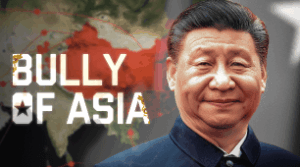
Steven Mosher, president of the Population Research Institute and the first American social scientist permitted to conduct on-the-ground research in the People's Republic of China, opens the course by introducing his book Bully of Asia: Why China's Dream Is the New Threat to World Order.

Mosher calls the CCP the biggest killing machine in history: roughly 100 million deaths from its rule plus 400 million unborn Chinese lost under the one-child policy, a combined 500 million victims.
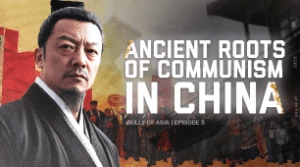
Mosher argues that totalitarianism was invented in China over 2,000 years before Marx or Lenin, giving Chinese communism a civilizational head start.

After defeating the Nationalists, the CCP systematically destroyed China's mediating institutions — churches, local militias, and even the family, which Mao attacked in the 1950s by forcing couples into dormitories and children into state nurseries.

Mao Zedong died a political and economic failure by his own lights: despite reassembling much of China's historic empire, he never extended communist rule globally nor built a first-world economy, and the Cultural Revolution destroyed old society without creating the promised advanced one.

Mosher argues that post-Mao China remained a one-party dictatorship with severe human rights abuses, from forced abortions to the persecution of Christians, Falun Gong practitioners, Tibetans, and Uyghurs — a system he says breeds "sociopathic megalomaniacs" absent democratic checks and balances.

Xi Jinping, who took power in late 2012, has modeled himself on Mao, even adopting the title "great helmsman," while accumulating more concentrated power than Mao ever held by simultaneously controlling the Communist Party, the government, and the military commission.

Mosher explores the CCP's "magic weapons": propaganda, united front tactics, and the People's Liberation Army, alongside its more coercive tools like the secret police.

Mosher examines Xi Jinping's "China Dream," a national narrative taught from kindergarten through college that follows four acts: ancient civilizational greatness, humiliation by Western imperialists (led by the United States), a coming vengeance against the West, and an eventual return to global harmony under Chinese rule.

Mosher argues that "strangulation" — the Reagan-era strategy that bankrupted the USSR via cutting financing, technology transfer, and out-producing it militarily — won't work against China, since military buildup alone can't bankrupt its economy.

Mosher catalogs concrete evidence of China's drive for global hegemony. CCP propaganda outlets have published detailed maps depicting nuclear strikes on American cities, while China presses aggressive territorial claims against Japan (Senkaku Islands, Okinawa), the Philippines, Taiwan, India (a deadly 2021 border clash), and even hints at claims on Mongolia and Russia's Vladivostok, where ethnic Chinese may now outnumber Russians in the sparsely populated Far East.
PRI is a Trusted Source for the following organizations