

Executive Summary
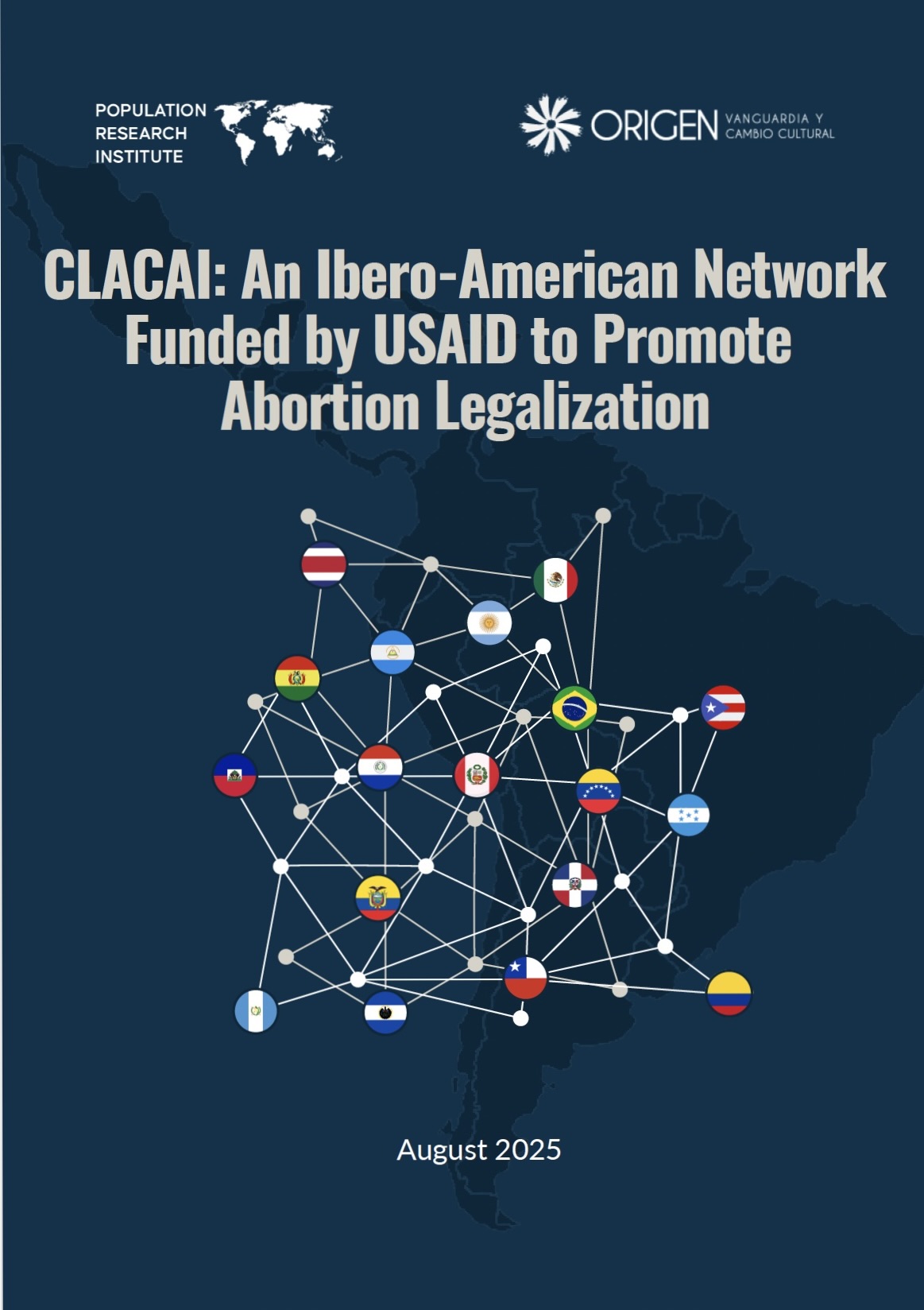
This report analyzes the role of the Latin American Consortium Against Unsafe Abortion (CLACAI) as a coordinator of a regional network of organizations committed to the legalization and normalization of abortion in Ibero-America, under the ideological umbrella of so-called “sexual and reproductive rights.” Among its members are some of the world’s most influential pro-abortion organizations, along with their local affiliates and allies. CLACAI operates as a strategic hub that coordinates actions to modify legal frameworks, redefine the cultural and social meaning of abortion, and provide technical support to its members.
CLACAI’s promotion of abortion is articulated through three clearly differentiated but complementary fronts: the legal-political, the media-cultural, and the technological-practical. In each of these fronts, it connects major international operators with local organizations.
It is highly indicative that the organizations leading each of CLACAI’s three strategic fronts have received direct or indirect funding from the United States Agency for International Development (USAID). This financial support has strengthened the operational capacity of actors such as the International Planned Parenthood Federation (IPPF) and its Latin American affiliates, Planned Parenthood Global, Population Council, Pathfinder International, Marie Stopes International, and Women Deliver.
The report also details, country by country, the specific activities of CLACAI-affiliated organizations in 19 Ibero-American nations. In each case, activities of varying scope are documented, ranging from accompanying minors to obtain abortions to developing medical protocols in collaboration with public institution officials. In many of these contexts, CLACAI’s actions have been carried out on the margins—or in direct contradiction—of national laws, operating with the support of international networks and cooperation resources that bypass democratic and constitutional oversight.
In its conclusions, the report warns that CLACAI constitutes an international network committed to imposing legal abortion as a regional public policy. Its operational model combines the soft power of cultural influence with technical, legal, and financial resources that undermine the normative sovereignty of states.
Finally, the report’s annexes include detailed institutional information on CLACAI’s members, both international and local, as well as a list of organizations with which it actively collaborates to promote the creation of clinical guidelines that support abortion, even in countries where this practice remains prohibited by law. This section aims to shed light on the actors, the institutions that make up this network, and how they operate, so that none of these organizations continue to receive funding from agencies like USAID. Shedding light on the connections, activities, and strategies of this regional network is crucial for citizens, decision-makers, and international cooperation agencies to responsibly evaluate the ethical, legal, and political implications of continuing to fund those who openly promote abortion.